Choosing between polyester vs natural fibers is the first decision that shapes how your custom print turns out: how bright the colors look, how the fabric feels on skin, how it should be cared for, and what sustainability story you can tell your customers. In this guide, Zalmon Fabric explains how the printing methods differ, the pros and cons of each, and when to pick which.
Is polyester or natural fiber better for custom printing? It depends on the product. Polyester wins for ultra-vivid color, a usually lower price per meter, and products like sportswear or merchandise. Natural fibers such as cotton, rayon, TENCEL™ and silk are cooler, softer and absorb sweat, which makes them the better choice for everyday clothing and premium fashion brands.
Polyester vs natural fibers: what is the difference?
The core difference is the raw material: polyester is a synthetic fiber made from petroleum, while natural fibers come from plants or animals. That origin affects everything, from how the fabric takes ink to how it feels after a full day of wear.
Polyester (usually PET, or polyethylene terephthalate) is a plastic spun into yarn. According to the Textile Exchange Materials Market Report, polyester is the most produced fiber in the world, well ahead of cotton. It is strong, wrinkle-resistant and quick-drying, but it absorbs almost no water.
Natural fibers fall into two groups. The first is true natural fibers such as cotton, linen (from the flax plant) and silk (a protein from silkworm cocoons). The second is regenerated cellulose fibers, which are made by dissolving wood pulp and spinning it back into fiber, such as rayon/viscose, modal and TENCEL™ Lyocell. The second group is often grouped with natural fibers because it comes from plants and behaves like cotton: breathable and absorbent.
How are polyester and natural fibers printed?
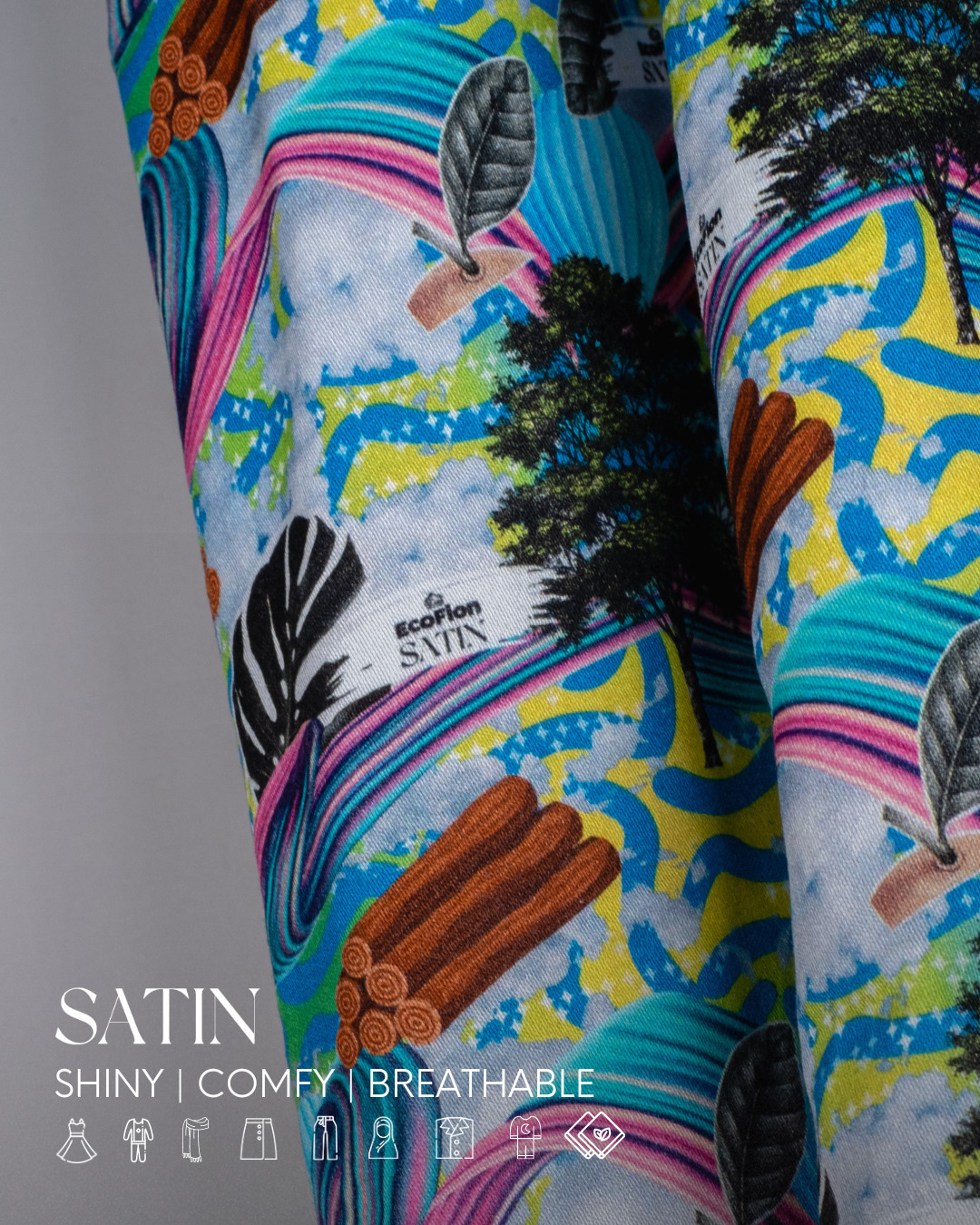
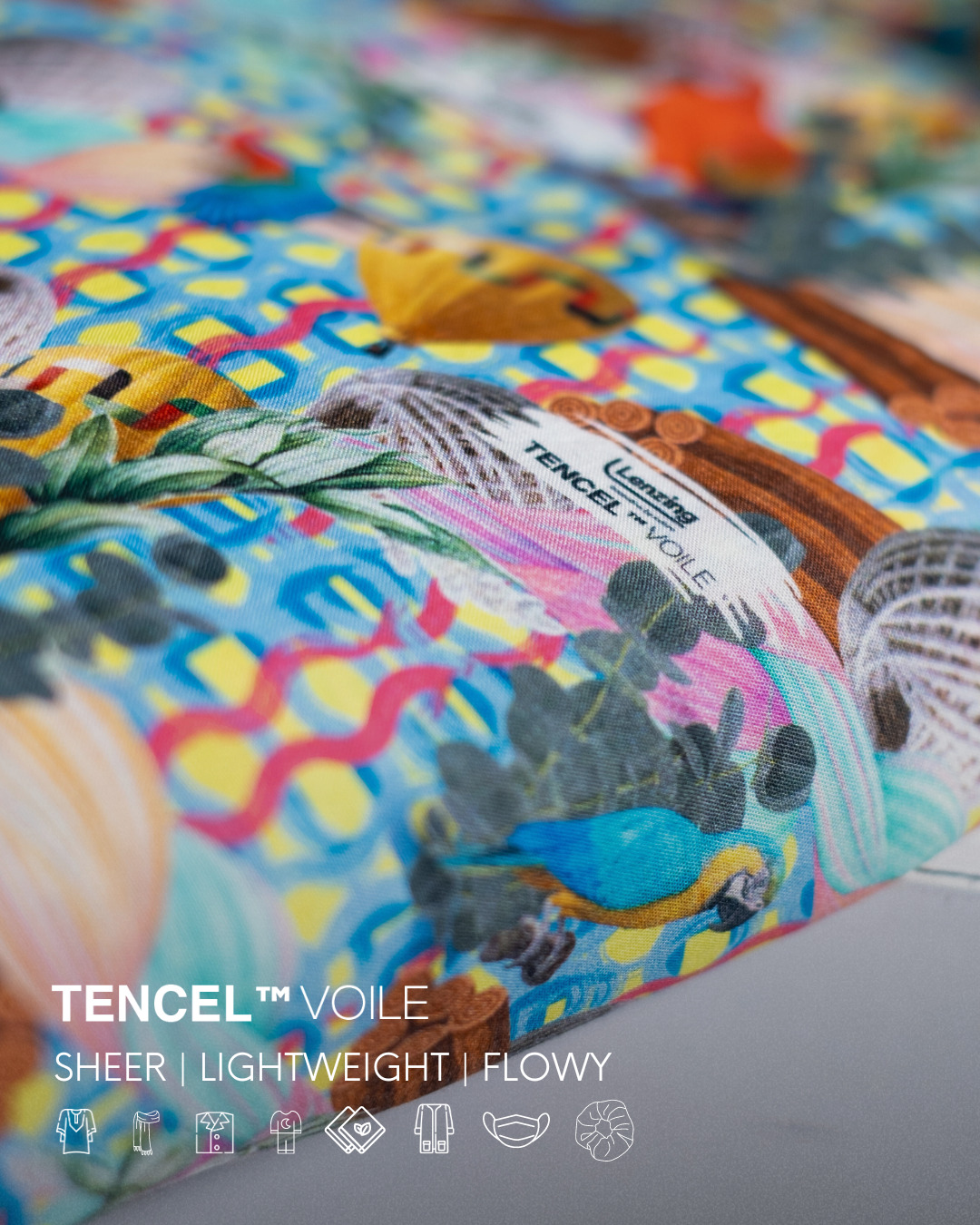
Polyester is printed with heat-activated disperse or sublimation inks, while natural fibers are usually printed with reactive inks (for cotton, rayon, TENCEL™ and linen) or acid inks (for silk). These inks are not interchangeable, because each one only bonds with certain fiber types.
Sublimation and disperse inks for polyester
Sublimation is a process in which ink turns into a gas under high heat and enters the polyester fiber. The design can be printed on transfer paper and heat-pressed onto the fabric, or printed directly on fabric and then heated. The result is very bright, wash-fast color, but it only works properly on fabrics with a high polyester content.
Reactive and acid inks for natural fibers
Reactive printing is a technique in which the ink forms a chemical bond with cellulose fibers. The process takes more steps: the fabric is pretreated, printed, steamed to fix the color, and then washed to remove excess ink. Because the ink becomes part of the fiber, the fabric stays soft with no coating on the surface. Silk follows a similar route with acid inks.
What are the pros and cons of each?
In short, polyester wins on durability and cost efficiency, while natural fibers win on comfort and premium value. Here is the breakdown.
Polyester
Pros
- Sublimation prints look very bright and sharp
- Resists wrinkles, shrinking and stretching
- Dries fast and holds up to heavy use
- Usually cheaper per meter
Cons
- Poor sweat absorption, feels hot in warm weather
- Prone to static and tends to hold body odor
- Does not biodegrade
- Sheds microfibers (microplastics) in the wash
On microplastics, a study on microplastic release from washing synthetic fabrics published in the journal Environmental Pollution found that polyester fabrics release large numbers of microfibers in every wash cycle.
Natural fibers
Pros
- Absorbs sweat and stays cool in tropical climates
- Soft on skin with a more natural drape
- Renewable raw materials that can biodegrade
- Signals premium quality and a stronger brand story
Cons
- Some types wrinkle easily (cotton, linen) or need gentle care (rayon, silk)
- Colors can look slightly softer than sublimation on polyester
- Usually higher price per meter
- Custom print MOQs are usually higher
Quick comparison: polyester or natural fibers?
| Aspect | Polyester | Natural fibers (cotton, rayon, TENCEL™, silk, linen) |
|---|---|---|
| Raw material | Petroleum (synthetic fiber) | Plants or animals |
| Printing ink | Disperse / sublimation | Reactive (cellulose), acid (silk) or pigment |
| Comfort | Low absorbency, tends to feel hot | Absorbent, cool, soft |
| Color | Very bright and sharp | Bright to soft, depending on the fabric |
| Care | Easy, wrinkle-resistant | Some types need more attention |
| Market perception | Functional, sporty, merchandise | Premium, natural, eco-friendly |
| Custom print MOQ at Zalmon Fabric | 10 meters | 50 meters for 2 designs (25 m per design) |
When should you choose polyester?
Choose polyester when your product needs very bright color and high durability, and will not sit against the skin for long periods. For example:
- Sports jerseys, running tops or activewear that must dry quickly
- Event merchandise: fabric flags, banners, pouches or crew uniforms
- Small design tests before you commit to a final fabric
- Tablecloths, cushion covers or décor that is rarely washed
Polyester also works if you want to try several prints on a small budget. Zalmon Fabric accepts polyester custom printing from 10 meters, so you can see how a design looks on fabric before a bigger run.
When are natural fibers the better choice?
Natural fibers are the better choice for clothing worn all day in hot weather and for brands positioned as premium or sustainable.
- Everyday dresses, shirts and modest wear: rayon, TENCEL™ or cotton for a cool feel and fluid drape.
- Premium scarves and hijabs: silk or TENCEL™ Modal for a soft sheen.
- Resort and summer collections: linen or cotton-linen blends for a natural look.
- Brands with a sustainability story: fibers from renewable raw materials are easier to explain to customers.
If you are still deciding which natural fiber to use, read rayon vs viscose vs TENCEL™ and our guide to choosing fabric for a clothing brand. You can browse every fabric type in the Zalmon fabric list.
What is the minimum order for custom printing at Zalmon Fabric?
Zalmon Fabric in Bandung accepts custom digital printing on natural-fiber fabrics from 50 meters for 2 designs (25 meters per design), and polyester custom printing from 10 meters. You bring your own design, and Zalmon Fabric prints it on the fabric you choose.
Zalmon Fabric weaves and prints in-house at its own mill in Bandung. Its natural-fiber range covers TENCEL™ Lyocell and Modal, cotton, rayon/viscose, silk and linen, plus premium polyester. If you need unprinted solid colors, there is also a ready stock solid color range.
The recommended workflow before production:
- Feel the fabrics first. Order the Zalmon Sample Pack to compare texture, weight and drape in person.
- Match the fabric to the product. Consider use, climate and your target retail price.
- Prepare your design file. Check resolution, repeat size and color against the design terms.
- Check the strike-off. A strike-off (a printed sample of your design on the actual fabric) at Zalmon Fabric takes 7–10 working days.
- Go to production. Digital print production in the normal queue takes at least 21 working days. Saturdays and Sundays are days off.
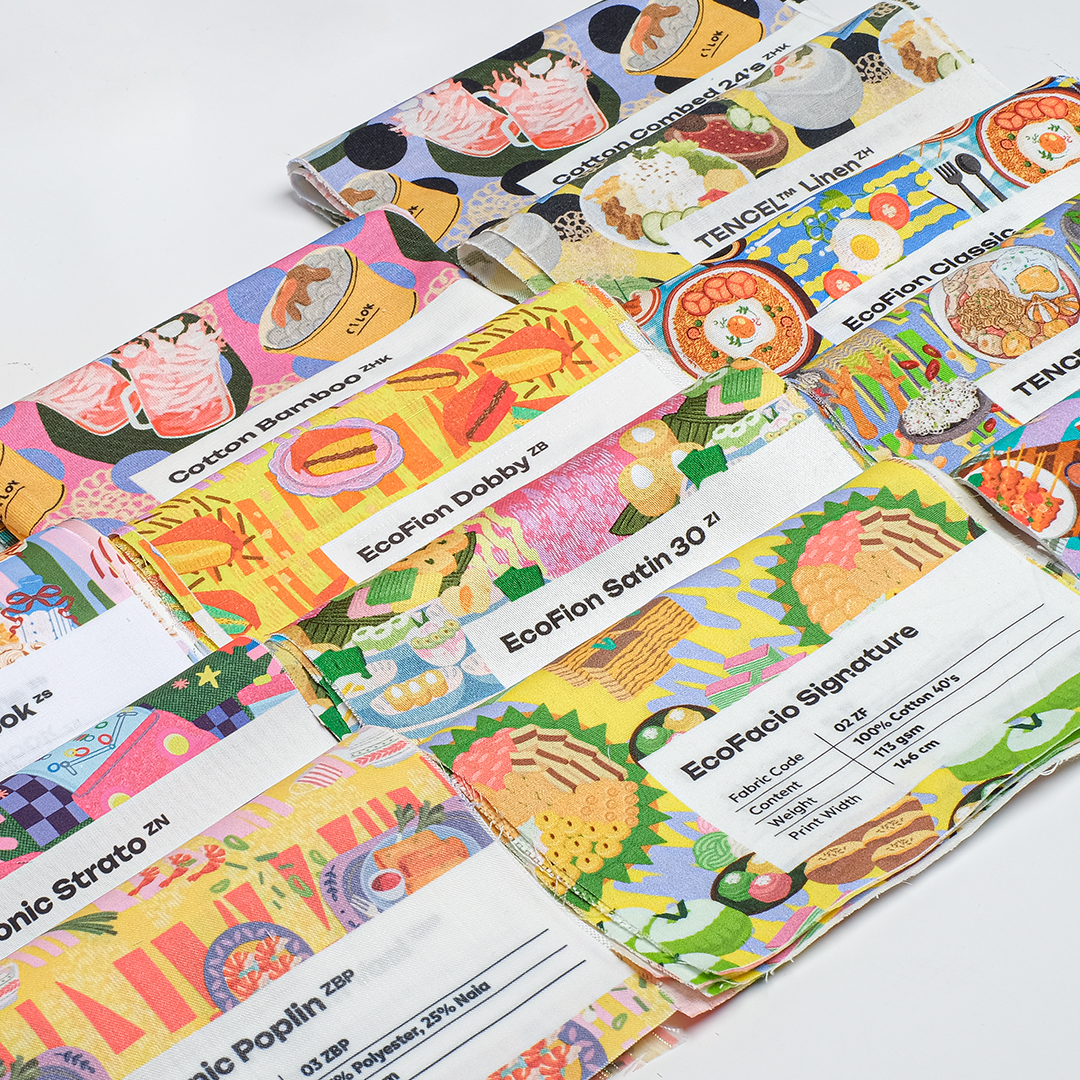
- Do not choose fabric from photos alone. Lighting and screens can mislead, so touch the fabric yourself.
- If your customers live in hot cities, put comfort first: pick natural fibers for everyday wear.
- Use polyester for merchandise or print tests, then move to natural fibers for your main collection.
In the end, the polyester vs natural fibers decision comes back to your product and your customers: polyester for function and efficiency, natural fibers for comfort and premium value.
Zalmon Fabric is a natural-fiber fabric supplier (TENCEL™, cotton, rayon/viscose, silk, linen) and custom digital fabric printing service based in Bandung, Indonesia. Fabrics are woven and printed in-house at its own mill, with OEKO-TEX and Lenzing certifications. Showroom: Ruko 23 Paskal B71, Bandung 40181, Indonesia. WhatsApp: +62 813-2282-8217.
Frequently Asked Questions
Can polyester be printed with the same ink as cotton?
No. Polyester needs heat-activated disperse or sublimation ink, while cotton and other cellulose fibers need reactive or pigment ink. Reactive ink cannot bond with polyester, and sublimation ink does not stay permanently on cotton.
Does polyester clothing feel hot in tropical weather?
Generally, yes. Polyester absorbs almost no sweat, so it feels warmer than cotton, rayon or TENCEL™ when worn for long periods in hot weather.
Are prints on natural fibers less vivid than on polyester?
Not necessarily. Sublimation on polyester does produce very sharp color, but printing on cotton, rayon or TENCEL™ can also deliver bright results. The final look depends on the fabric, its base color and your design file, so always check a strike-off before production.
Are TENCEL™ and rayon natural fibers?
Technically, TENCEL™ and rayon are regenerated cellulose fibers, made from wood pulp that is dissolved and respun. Because they come from plants and absorb moisture like cotton, they are often grouped with natural fibers.
Does polyester fabric release microplastics?
Yes. Research published in Environmental Pollution shows that synthetic fabrics such as polyester shed microfibers in the wash, and these fibers can end up in waterways. Natural fibers also shed fibers when washed, but those fibers can biodegrade.
What is the minimum order for polyester and natural-fiber custom printing at Zalmon Fabric?
Zalmon Fabric accepts polyester custom printing from 10 meters. For natural-fiber fabrics, the minimum order for custom digital printing is 50 meters for 2 designs, or 25 meters per design.
Not Sure Whether to Pick Polyester or Natural Fibers?
Tell the Zalmon Fabric team about your product and your customers. We will help you match the right fabric to the design you bring, from a small test to a full collection.
Chat via WhatsApp →Get the Sample PackShowroom: Ruko 23 Paskal B71, Bandung, Indonesia.