Choosing the best fabric for pajamas looks like a small decision, yet the fabric is the main reason customers come back to the same sleepwear brand. Pajamas sit against the skin for hours, get washed far more often than daywear, and need to stay comfortable in warm, humid nights. This guide compares TENCEL™ Modal, TENCEL™ Lyocell, rayon, cotton, silk, and linen from a brand owner's point of view, with practical tips for producing your own printed collection.
What is the best fabric for pajamas? For warm climates, cellulose fabrics such as TENCEL™ Modal, TENCEL™ Lyocell, and rayon/viscose are the most popular choices because they are soft, drapey, and absorb sweat well. Cotton suits more structured, easy-care sets, while silk is usually reserved for premium or gift collections.
Which is the best fabric for pajamas in warm weather?
The best pajama fabric for warm weather is one that feels soft on the skin, breathes, and manages sweat quickly, so the body stays dry through the night. In humid climates the last point often decides everything: a fabric that feels lovely in the showroom can feel stuffy after two hours of sleep.
Five things to assess when choosing pajama fabric:
- Softness (hand feel): how the fabric feels to the touch and as it moves against the skin.
- Breathability and absorbency: how quickly the fabric takes up moisture and releases it again.
- Wash durability: pajamas are washed much more often than going-out clothes.
- Drape: drape is the way a fabric falls and follows the body when worn.
- Print result: how sharp and vivid a pattern looks on that fabric.
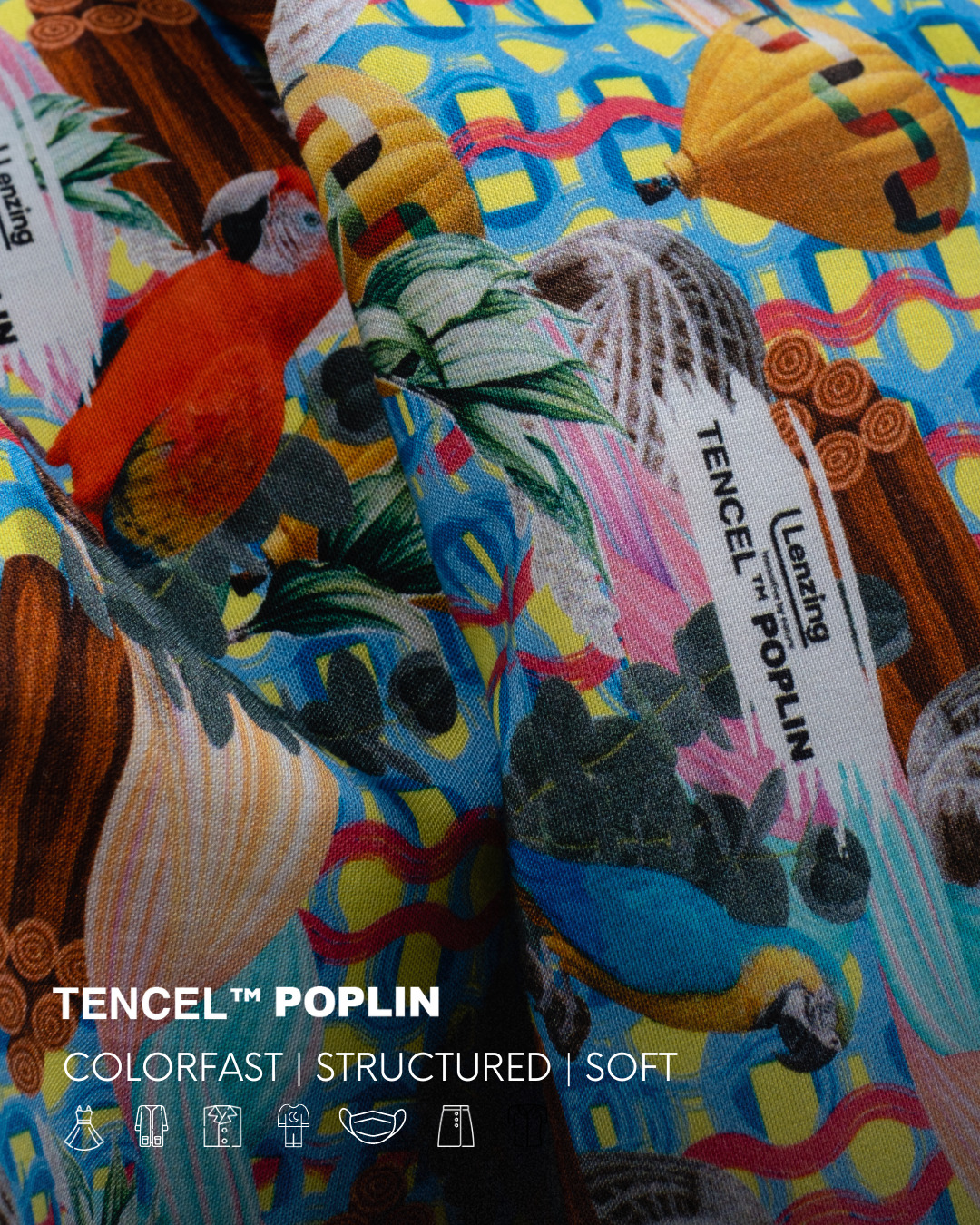
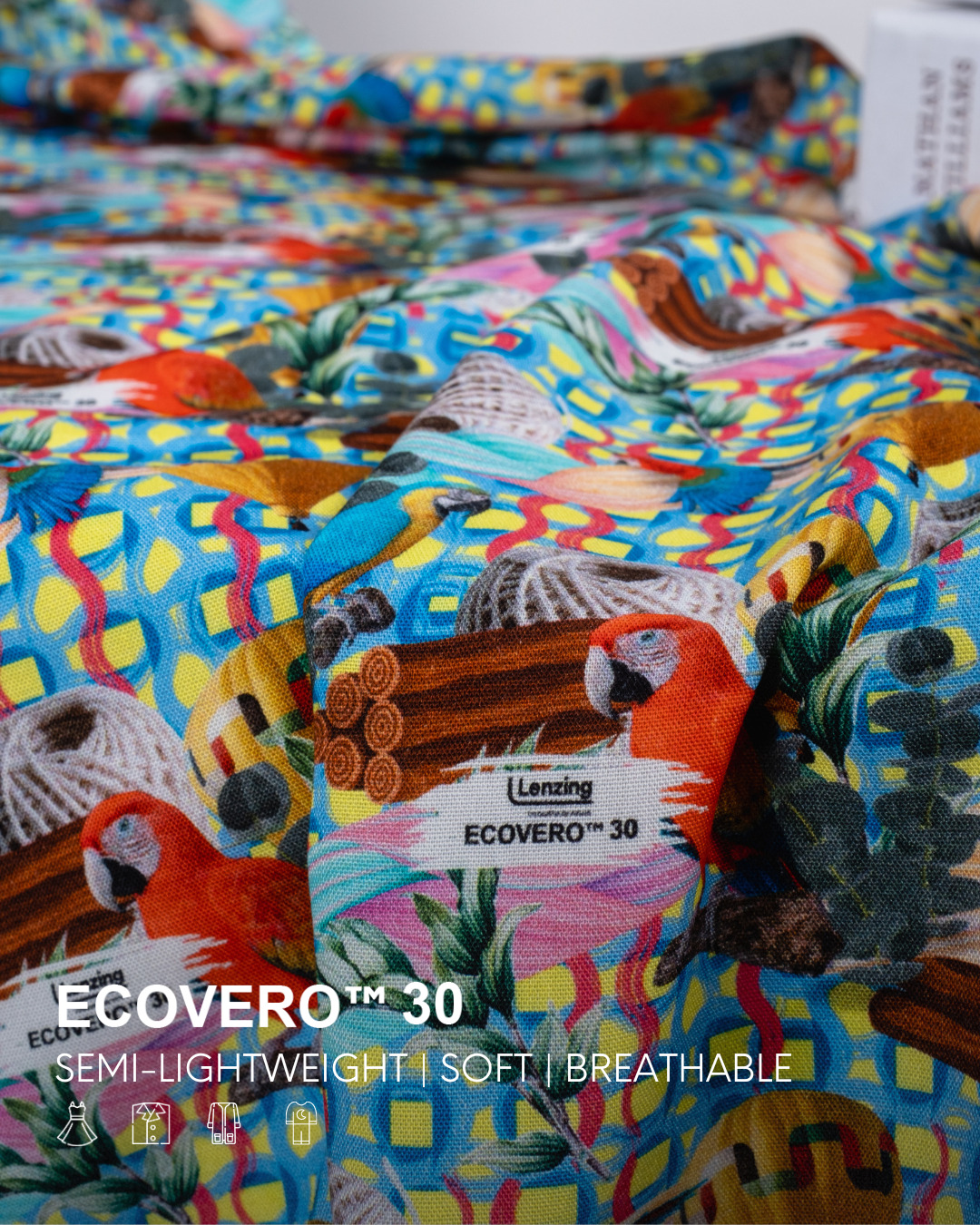
Many favorite pajama fabrics are regenerated cellulose fibers. Regenerated cellulose fiber is fiber made from processed wood pulp that is spun back into yarn; TENCEL™ Lyocell, TENCEL™ Modal, and rayon/viscose all belong to this group. According to the official TENCEL™ fibers page, Lyocell and Modal fibers are made from wood pulp and are known for natural softness and a pleasantly dry feel on the skin.

How do TENCEL, rayon, cotton, silk, and linen compare for pajamas?
In short, TENCEL™ Modal leads on softness, TENCEL™ Lyocell on a cool touch, rayon on drape at a friendlier cost, cotton on easy care, silk on luxury, and linen on airflow. The table below summarizes the general character of each fabric for sleepwear.
| Fabric | Feel on skin | Strengths for pajamas | Watch out for | Best for |
|---|---|---|---|---|
| TENCEL™ Modal | Very soft, smooth | Stays soft after frequent washing, rich color | Higher material cost than rayon | Everyday premium pajamas |
| TENCEL™ Lyocell | Cool, sleek, fluid | Good moisture management, beautiful drape | Follow care labels to keep the surface smooth | "Cooling" lines for hot weather |
| Rayon/viscose | Cool, light, flowy | Comfortable, good drape, wide choice | Can shrink and crease, needs a wash test | Nightdresses, lounge sets, entry lines |
| Cotton | Soft, slightly crisp | Strong, easy care, sharp prints | Less drape, can feel warmer | Classic button-up sets, kids' pajamas |
| Silk | Slippery, luxurious | Premium feel, ideal for gifting | Needs more careful care | Exclusive lines, gift hampers |
| Linen / linen blends | Textured, "dry" | Excellent airflow | Creases easily | Natural-style loungewear |
If you are torn between the two TENCEL™ fibers, read our guide to TENCEL™ Lyocell vs Modal.
Pros and cons of cellulose fabrics for pajamas
Pros
- Soft and cool, comfortable for sleeping in warm weather.
- Fluid drape that makes pajamas look neat in catalog photos.
- Takes color well, so printed patterns look vivid.
Watch out for
- Some fabrics can shrink in hot water.
- A wash test is needed before you finalize pattern sizes.
- Smooth surfaces show creases more easily than heavy cotton.
Should pajamas be made from woven or knit fabric?
Woven fabric suits button-up pajama sets, while knit fabric suits stretchy T-shirt-style pajamas. Woven fabric is cloth formed by warp and weft yarns crossing each other, whereas knit fabric is formed from interlocking loops of yarn, which makes it more elastic.
For woven pajamas, the weave also shapes how the garment feels:
- Plain/poplin/voile: light, thin, and the coolest to wear.
- Twill: more drape and slightly heavier, good for pajama pants.
- Satin: a glossy, slippery surface with a luxurious look.
For woven pajama sets in hot climates, choose a light fabric that is not too tightly woven so air can keep moving.
Why can custom-printed pajamas set your brand apart?
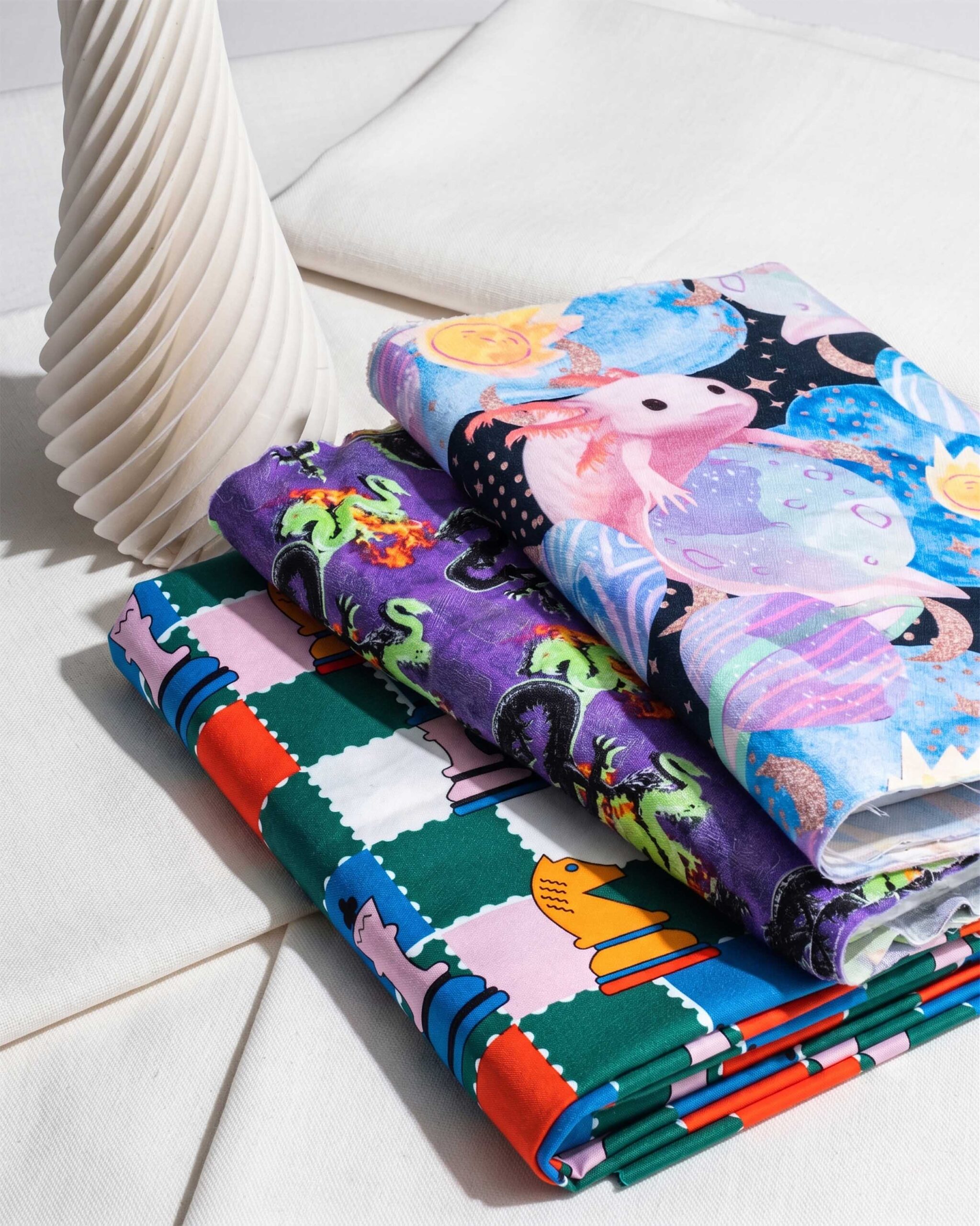
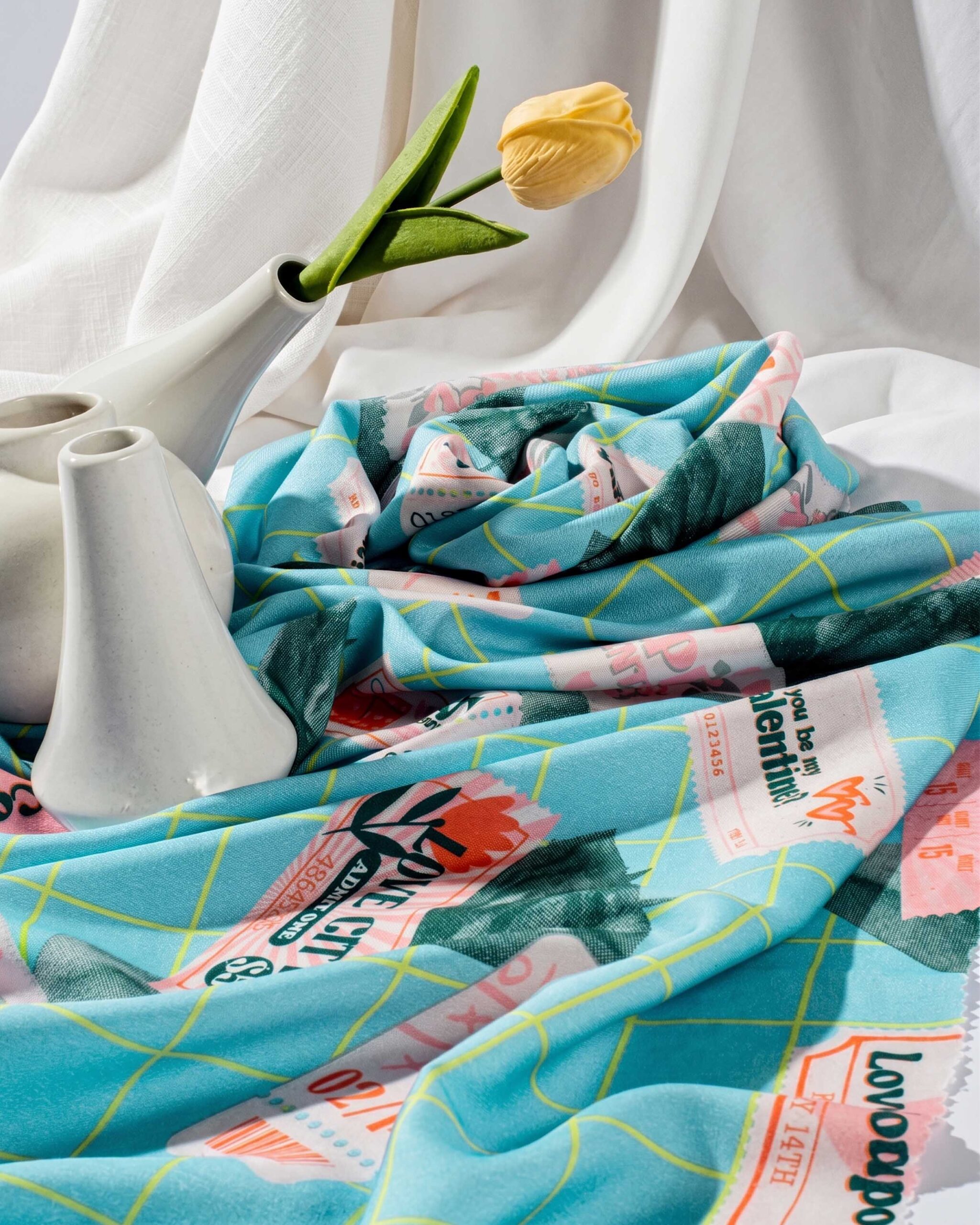
A custom print makes your pajamas impossible to find in any other store, so customers buy the design, not just the fabric. In a crowded sleepwear market, a signature pattern also helps customers recognize your collection in their social feeds.
Zalmon Fabric in Bandung offers custom digital printing on natural-fiber fabrics from 50 meters for 2 designs, or 25 meters per design. For satin-style polyester lines, Zalmon Fabric also prints premium polyester from 10 meters. You bring your own artwork, and the team prints it through its custom digital fabric printing service.
Before production, you receive a strike-off. A strike-off is a printed sample of your pattern on the actual fabric, used to check color and scale before bulk production. At Zalmon Fabric, a digital print strike-off takes 7–10 working days, and production in the normal queue takes at least 21 working days (closed Saturday–Sunday).
If your collection is mostly solid pajamas, there are two routes: ready-stock solid color fabrics for a fast start, or custom fabric dyeing from 300 meters per color per fabric type when you need a signature brand color.
Steps to choose fabric for a pajama collection
- Define your customer and retail price. Entry and premium lines usually need different fabrics.
- Choose the pajama style. Button-up sets, nightdresses, or lounge pants decide whether you need woven or knit.
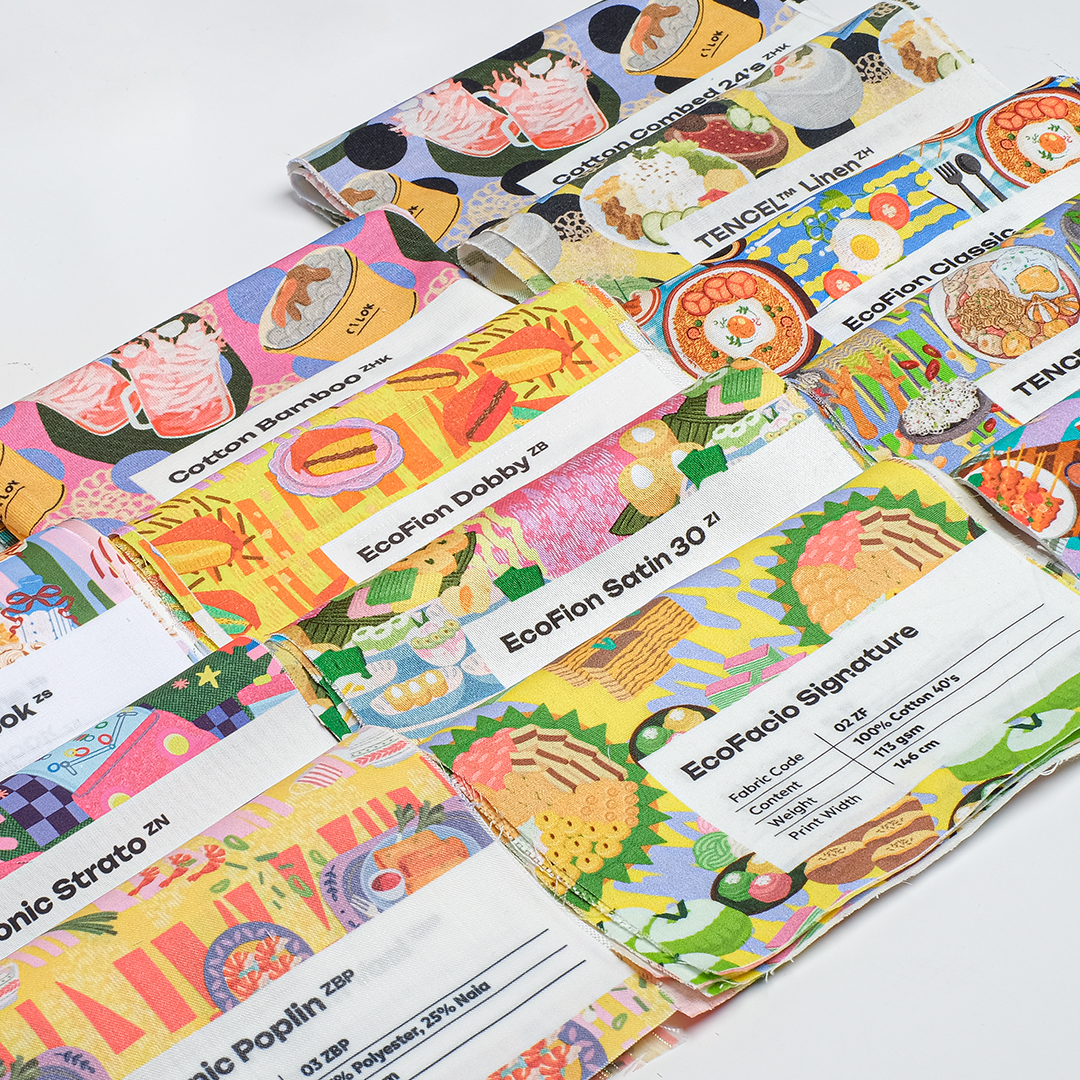
- Feel the samples and run a wash test. Wash several times and note shrinkage, color, and softness. The Zalmon Sample Pack lets you compare many fabrics at once.
- Calculate the meters you need. Use our guide on how much fabric you need for clothing so you neither run short nor over-order.
- Prepare the artwork and approve the strike-off. Check color and pattern scale on the same fabric used for production.
- Schedule backwards from your launch date. Leave time for strike-off, fabric production, sewing, and the catalog shoot.
What mistakes do brands make when choosing pajama fabric?
The most common mistake is choosing fabric from photos or a first touch alone, without a wash test or a real night's wear. As a result, complaints only appear once the product reaches customers.
- Ignoring shrinkage, so pajama sizes change after washing.
- Choosing fabric that is too heavy for hot weather.
- Not checking print colors on the actual fabric before production.
- Forgetting about material safety for sensitive skin.
Pajamas stay in direct contact with the skin for long periods. Under OEKO-TEX® STANDARD 100, products with direct skin contact such as bed linen fall into product class 2, with stricter harmful-substance limits than products without skin contact. Zalmon Fabric holds OEKO-TEX and Lenzing certifications.
The best fabric for pajamas combines how it feels, how it survives washing, and the story your brand wants to tell. Start with samples, test them in real sleep conditions, then lock in your fabric before you order in volume.
Zalmon Fabric is a natural-fiber fabric supplier (TENCEL™, cotton, rayon/viscose, silk, linen) and custom digital fabric printing service based in Bandung, Indonesia. Fabrics are woven and printed in-house at its own mill, with OEKO-TEX and Lenzing certifications. Showroom: Ruko 23 Paskal B71, Bandung 40181, Indonesia. WhatsApp: +62 813-2282-8217.
FAQ
Is TENCEL a good fabric for pajamas?
Yes, TENCEL™ Modal and TENCEL™ Lyocell are popular pajama fabrics because they are soft, drapey, and comfortable in warm weather. Modal stands out for softness, while Lyocell feels cooler and sleeker. Both suit premium sleepwear lines.
Is rayon or cotton better for pajamas?
It depends on the style and your market. Rayon is cooler and more fluid, ideal for nightdresses and lounge sets, but it needs a shrinkage test. Cotton is stronger and easier to care for, ideal for classic button-up sets and kids' pajamas.
How many meters of fabric does one pajama set need?
It depends on the style, size, and fabric width, so no single number fits every design. The most accurate method is to calculate from the pattern and marker for each size, then add an allowance for shrinkage and cutting. The fabric calculation guide on the Zalmon Fabric blog can help.
What is the minimum order for custom-printed pajama fabric at Zalmon Fabric?
Zalmon Fabric offers custom digital printing on natural-fiber fabrics from 50 meters for 2 designs, or 25 meters per design. For premium polyester, the minimum custom print order starts at 10 meters.
How long does custom-printed pajama fabric take to produce?
At Zalmon Fabric, a digital print strike-off takes 7–10 working days. After the strike-off is approved, production in the normal queue takes at least 21 working days, closed on Saturday and Sunday.
Ready to launch pajamas in your own prints?
Tell us your pajama styles, target market, and number of designs. The Zalmon Fabric team will help you choose the best fabric for pajamas, from samples to production.
Chat via WhatsApp →Get the Sample PackShowroom: Ruko 23 Paskal B71, Bandung, Indonesia.