
You keep hearing about TENCEL™, but then your supplier asks: Lyocell or Modal? It is a fair question. Both fibers come from wood, both feel smooth, and both are made by Lenzing. In this guide we compare TENCEL Lyocell vs Modal in practical terms: how each fiber is made, how it feels on the skin, how it drapes, and which products it suits best. The goal is simple: to help you choose your fabric with confidence before your next collection goes into production.
TENCEL™ at a glance: one brand, two fibers
TENCEL™ is Lenzing's brand name for cellulose fibers made from wood. Under this brand there are two main fibers for fashion textiles: TENCEL™ Lyocell and TENCEL™ Modal. According to the official TENCEL™ Lyocell and Modal fibers page, both use wood from forests managed under FSC® or PEFC standards.
So when someone says "TENCEL fabric", that is not specific enough yet. The character of the fabric depends on the fiber type, plus the yarn and weave construction (for example poplin, twill or voile).
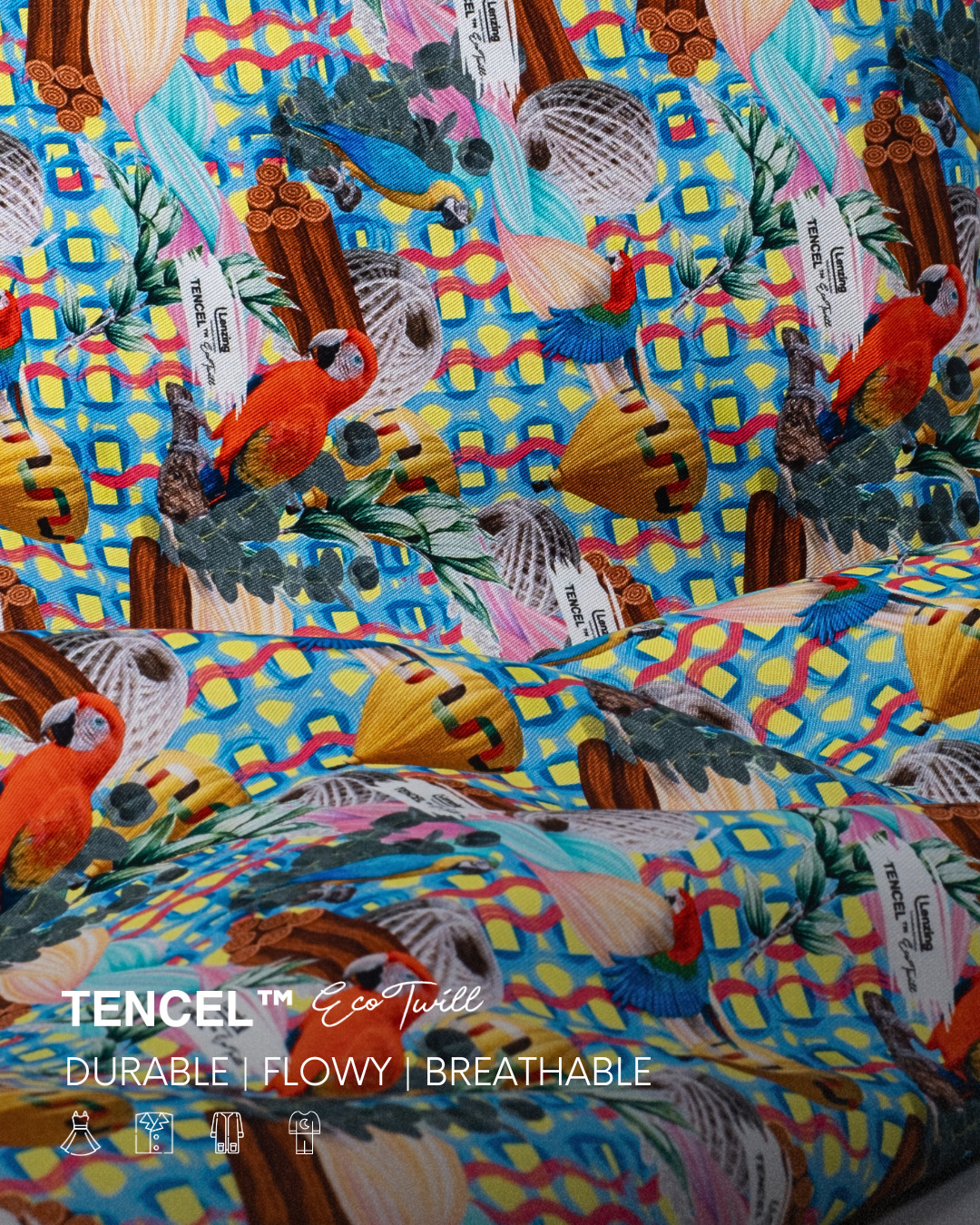
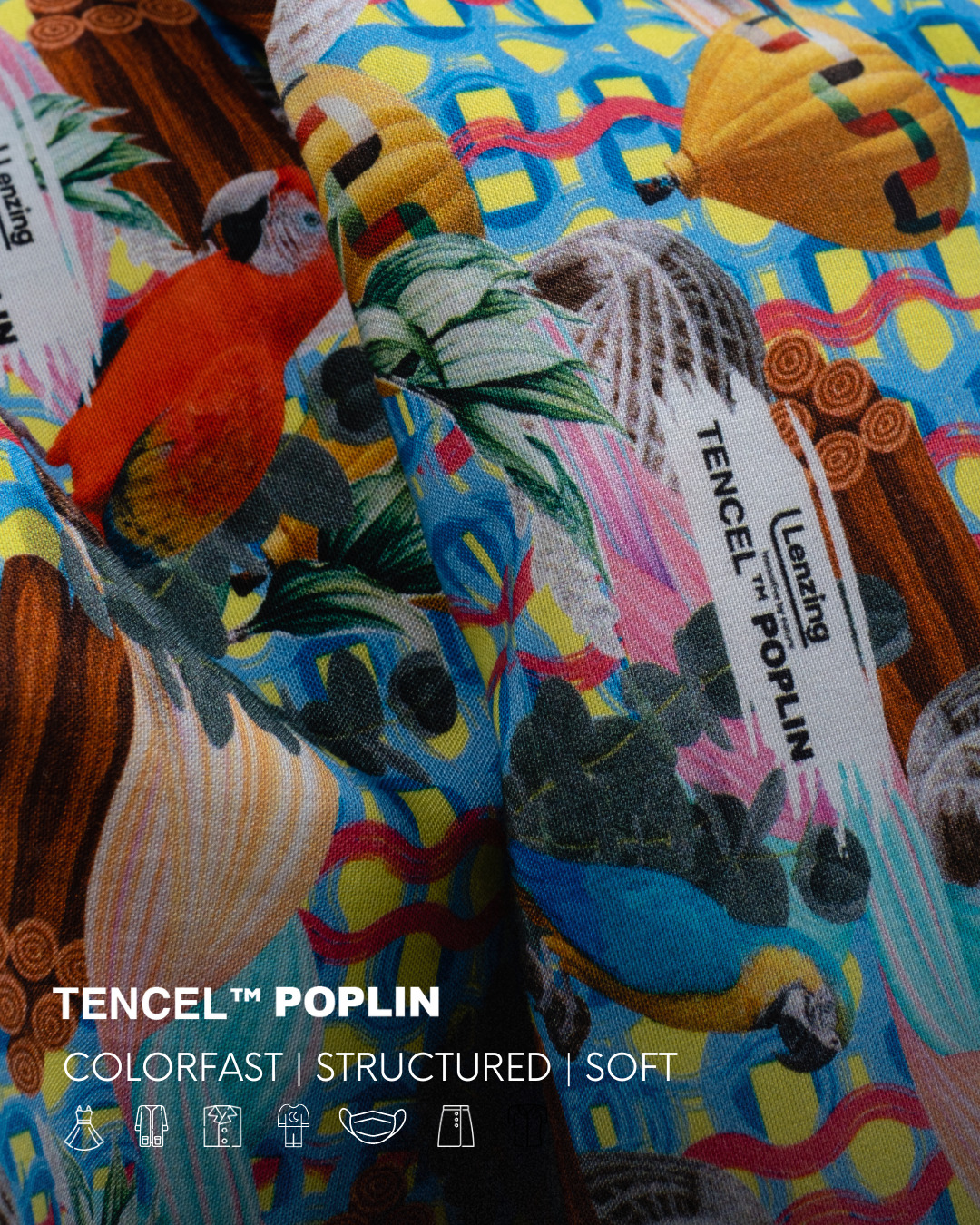
TENCEL Lyocell vs Modal: how each fiber is made
This is where the most fundamental difference lies.
TENCEL™ Lyocell: a closed-loop process
For Lyocell, wood pulp is dissolved directly in a solvent and then spun into fiber. The solvent is recovered and reused. On its TENCEL™ Lyocell page, Lenzing states that more than 99.8% of the solvent is fed back into the process, resulting in close-to-zero waste. The process also produces a strong fiber (high tenacity).
TENCEL™ Modal: a modified viscose process
Modal is made with a modified viscose process. The cellulose has to be chemically altered before it is dissolved, and the chemicals are then recovered at high rates. The result is a fiber known for being exceptionally soft and for staying soft after repeated washing.
In short: Lyocell wins on strength and a more "closed" process, while Modal wins on long-lasting softness.
Fabric character compared
| Aspect | TENCEL™ Lyocell | TENCEL™ Modal |
|---|---|---|
| Raw material | Wood from FSC®/PEFC-certified forests | Wood from FSC®/PEFC-certified forests |
| Process | Closed loop, >99.8% solvent recovered | Modified viscose process |
| Hand feel | Smooth, cool, subtle sheen | Very soft, slick, "silky" |
| Strength | High for a cellulose fiber | Good, but generally below Lyocell |
| Drape | Fluid, but still has some "body" | Very fluid and flowing |
| Breathability & moisture | Excellent, feels dry on skin | Good, feels dry on skin |
| Best for | Shirts, modest wear, dresses, light outerwear, trousers | Innerwear, pajamas, loungewear, tees, hijabs |
Note: the final character depends heavily on fabric construction. A TENCEL™ twill will feel heavier than a TENCEL™ voile, even though the fiber is the same.

Strengths and things to watch
TENCEL™ Lyocell
- Strong and stable in processing
- Comfortable in tropical climates
- Subtle sheen
- Closed-loop process is an easy story to tell customers
- Watch out: some constructions feel more structured and can wrinkle if not cared for properly
TENCEL™ Modal
- Very soft on the skin
- Beautiful, flowing drape
- Softness lasts after washing
- Ideal for pieces worn for long hours
- Watch out: less suited to structured designs; patterns need more careful cutting and sewing
Which one fits your product?
The best choice depends on the design, your target customer and the experience you want to offer. Use this simple guide:
- Everyday modest wear & long dresses → Lyocell in a poplin or twill construction usually works well: cool, fluid, but not too sheer.
- Shirts & light outerwear → Lyocell, because it is stronger and has more body.
- Loungewear, pajamas, innerwear → Modal, because its softness is felt most during long wear.
- Hijabs & scarves → Modal for a soft, flowing look; Lyocell voile for something lighter and crisper.
- Printed collections → both work. Just test the colors and drape with a strike-off before production.
- Touch the fabric. Photos cannot show drape or softness.
- Wash one sample piece and compare before and after.
- Ask about the fabric construction (weight, weave), not just the fiber.
- Match the fabric to the pattern: loose silhouettes love fluid fabrics, structured designs need fabric with body.
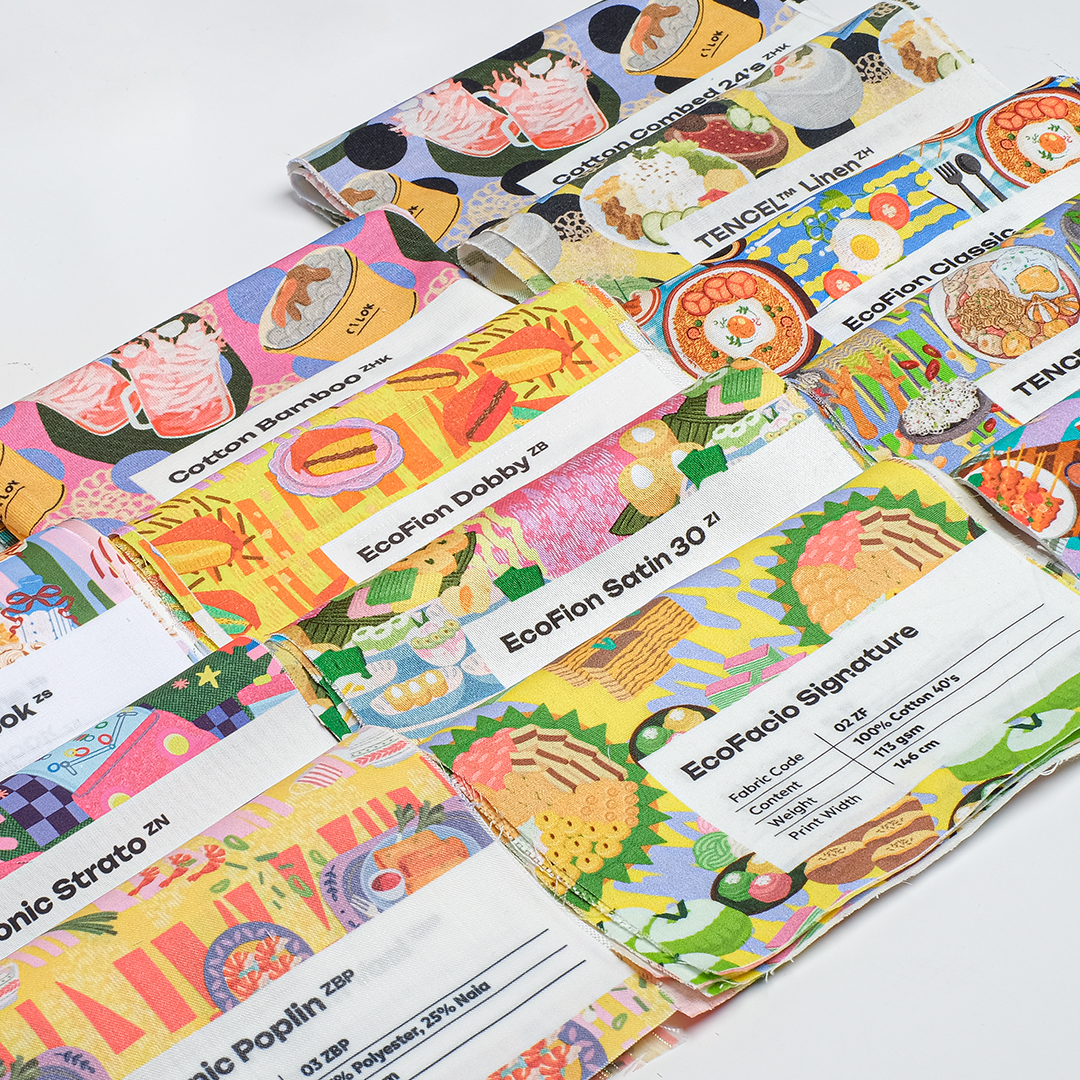
The quickest way to compare is the Zalmon Sample Pack: you can feel several fabrics side by side before deciding.
How to care for TENCEL™ Lyocell and Modal
The right fabric can still disappoint if it is cared for the wrong way. Since Lyocell and Modal are both cellulose fibers, their care is similar, and it is worth sharing these tips with your customers on a care label or card.
- Wash in cold or low-temperature water, ideally on a gentle cycle.
- Use a mild detergent and avoid bleach.
- Do not wring hard; press the water out and dry in the shade.
- Iron on low to medium heat, preferably while the fabric is still slightly damp.
- For printed fabric, turn the garment inside out before washing to protect the print surface.
A common mistake happens even earlier: choosing fabric by fiber name alone without checking the construction, then being surprised when the finished garment feels too thin or too stiff. Make it a habit to test a sample and sew one prototype before ordering in volume. This small step saves revision costs and protects the quality of your first collection.
TENCEL™ options at Zalmon Fabric
Zalmon supplies natural-fiber fabrics, including TENCEL™ Lyocell and TENCEL™ Modal, in several constructions. See the full range on our fabric list. For brands, there are a few routes:
- Custom digital printing: bring your own design; MOQ for natural fabrics is 50 meters for 2 designs (25 m per design). Strike-off takes 7–10 working days; production in the normal queue takes at least 21 working days.
- Ready stock solid color: for plain-color collections without waiting for production.
- Custom fabric dyeing: for a solid color matched to a Pantone TCX code or a fabric reference.
Weaving and printing are done in-house at our own mill in Majalaya, Indonesia.
FAQ
Are TENCEL Lyocell and TENCEL Modal both natural fibers?
Both are cellulose fibers made from wood, so they are often grouped as wood-based or regenerated cellulose fibers. The difference lies in how they are made and the final character of the fabric.
Which is softer, Lyocell or Modal?
TENCEL™ Modal generally feels softer and slicker, and its softness lasts after repeated washing. Lyocell is smooth too, but usually feels slightly denser with a subtle sheen.
Which is cooler for hot, humid climates?
Both manage moisture well and feel dry on the skin. Lyocell is often chosen for everyday wear in hot weather because it absorbs sweat very well and the fabric stays strong.
Can TENCEL fabric be custom printed?
Yes. At Zalmon, TENCEL™ is one of the natural fabrics available for custom digital printing, with an MOQ of 50 meters for 2 designs. We recommend a strike-off first to check colors on your chosen fabric.
Does TENCEL Modal wrinkle easily?
Wrinkling depends largely on the fabric construction and how it is cared for, so it is best to check on a sample. Wash at low temperature, avoid wringing hard and dry in the shade.
Still deciding between Lyocell and Modal?
Understanding TENCEL Lyocell vs Modal is the first step to a collection that feels exactly the way you imagined. If you are still unsure which one suits a specific design, tell our team about your product plans. We will help match you with the right fabric and production route.
Chat via WhatsApp →Get the Sample PackShowroom: Ruko 23 Paskal B71, Bandung, Indonesia.