Your designs might be what makes people stop scrolling, but the fabric is what makes them buy again. That's why choosing fabric for a clothing brand deserves attention from day one, not after your patterns and prints are finished. In this guide, we walk through the practical steps: understanding fibers, reading weave and fabric weight, and matching your fabric choice to MOQs and production timelines.
Why fabric choice shapes your brand
Your customers feel the fabric every time they wear your product. A fabric that feels hot, wrinkles easily, or fades fast leaves a "not worth it" impression, no matter how good the design is. A fabric that drapes well, breathes, and lasts builds trust in your brand.
Fabric also affects what happens behind the scenes:
- Cost of goods, since each fiber and fabric construction comes at a different cost.
- Production method, such as whether your print suits digital or rotary printing, or whether a dyed solid fabric is enough.
- Brand positioning, for example a label built around natural fibers or collections made for tropical weather.
- Care, which you will need to explain on your labels and product pages.
New brands often pick fabric last, after the designs and patterns are done. The result is a fabric chosen because it was available or cheapest, and garments that don't turn out as imagined. Flip the order and choose fabric alongside your designs, and you'll save rounds of revisions and time.
Choosing fabric for a clothing brand in 7 steps
- Define the product and who wears it. Everyday modest dresses, office shirts, outerwear, and scarves all have different needs. Ask: what climate is it worn in, how often is it washed, and is the silhouette structured or fluid?
- Pick the fiber. Fiber determines how the fabric feels on skin, how well it absorbs moisture, and how much it shines. Compare the options in the table below.
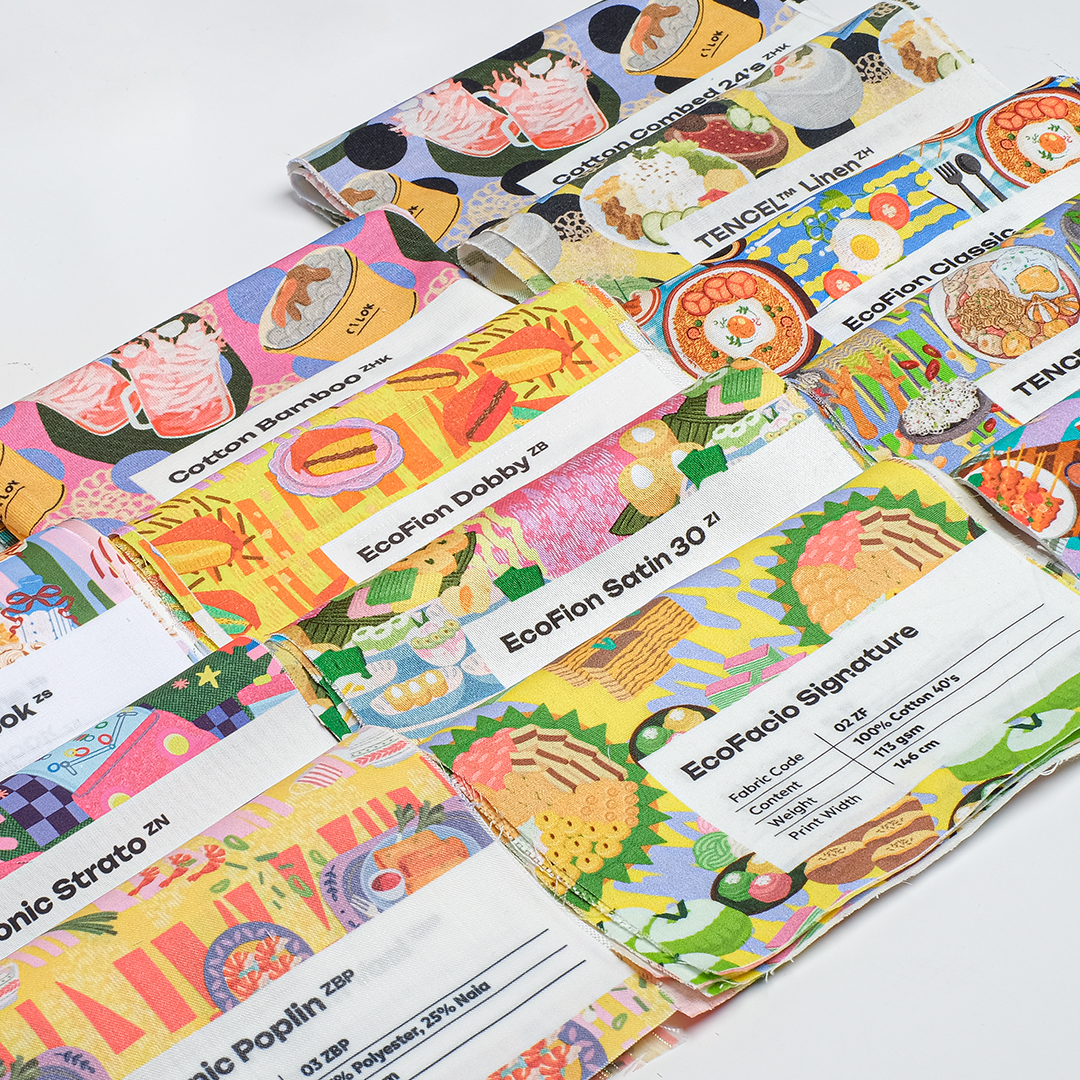
- Look at weave and weight. The same fiber can feel completely different in a different weave or weight.
- Check drape and hand feel. Scrunch, hang, and stretch the sample. See whether it wrinkles easily, feels stiff, or is too sheer.
- Decide on color and print method. Custom prints need printing; solid colors can come from custom dyeing or ready stock colors.
- Calculate MOQ and lead time. Match them to your budget, the number of designs, and your launch date.
- Request samples and a strike-off. Never place a large order before you've seen and felt the result yourself.
Know your fibers: natural vs polyester
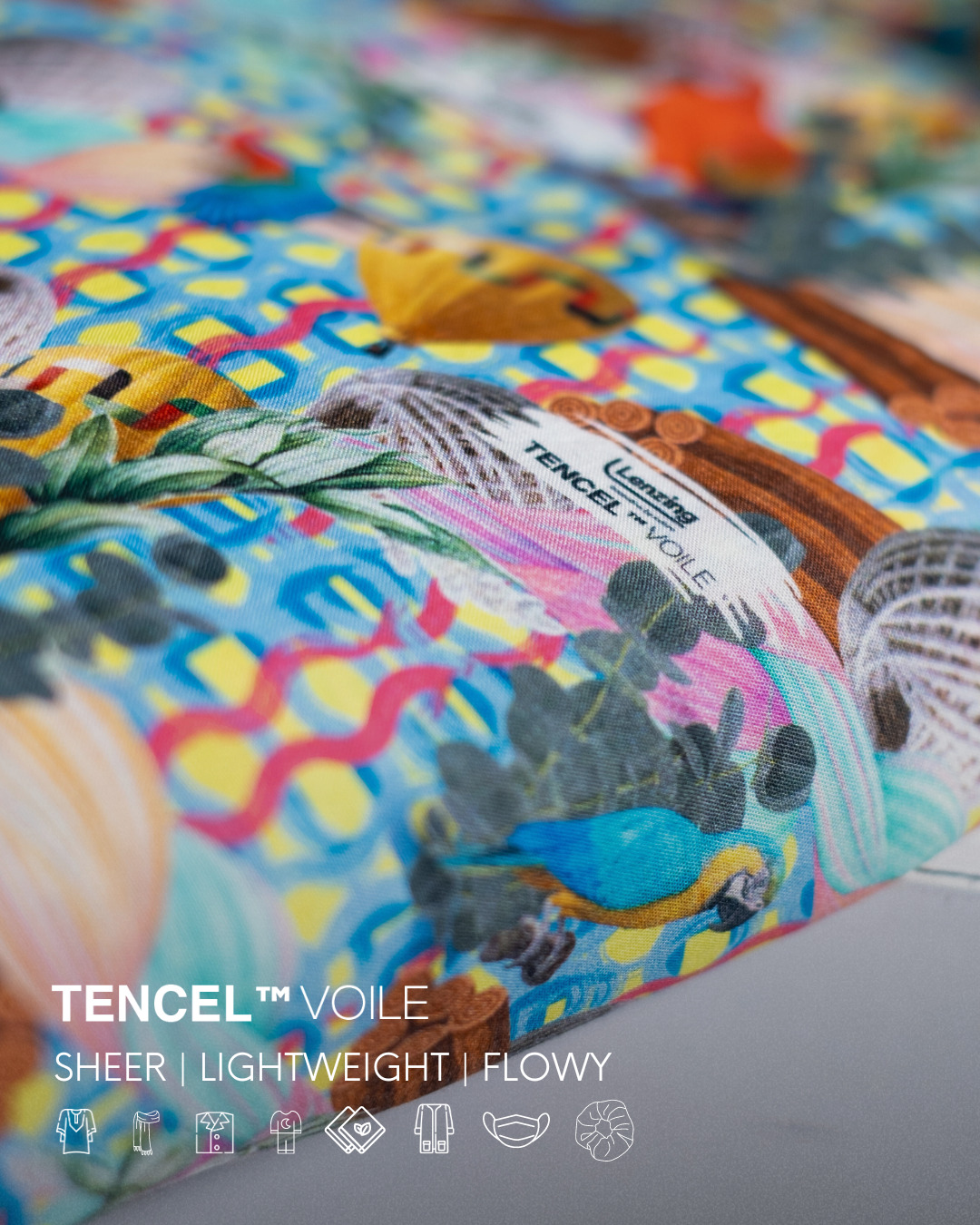
The most basic step in choosing fabric is understanding fibers. Broadly, there are natural fibers (cotton, linen, silk), wood-based cellulosic fibers such as TENCEL™ Lyocell and Modal, rayon/viscose, and synthetic fibers such as polyester.
| Fabric type | General character | Best for |
|---|---|---|
| TENCEL™ Lyocell | Soft, cool, moisture-absorbing, fluid drape | Modest dresses, dresses, premium shirts |
| TENCEL™ Modal | Very soft, smooth, flexible | Innerwear, loungewear, casual tops |
| Cotton | Comfortable, absorbent, easy care | Shirts, tees, outerwear, trousers |
| Rayon/Viscose | Cool, fluid, lightweight | House dresses, blouses, everyday dresses |
| Silk | Lustrous, light, luxurious | Scarves, premium hijabs, accessories |
| Linen | Strong, cool, natural texture, wrinkles easily | Relaxed shirts, outerwear, trousers |
| Premium polyester | Durable, wrinkle-resistant, vivid color | Uniforms, merchandise, hard-wearing pieces |
If your brand is all about comfort in warm weather, natural and cellulosic fibers are usually the first choice. Polyester still has its place, especially for products that need high durability or when you want a smaller test budget. For a closer comparison, read rayon vs viscose vs TENCEL™.
Weave and weight: the secret behind how fabric feels
Two cotton fabrics can feel like two different materials. The reason is weave construction and fabric weight (grams per square meter, or GSM).
Plain weave
Warp and weft yarns cross over and under one at a time. The result is tight, light, and versatile, like poplin and voile. Great for shirts and blouses.
Twill
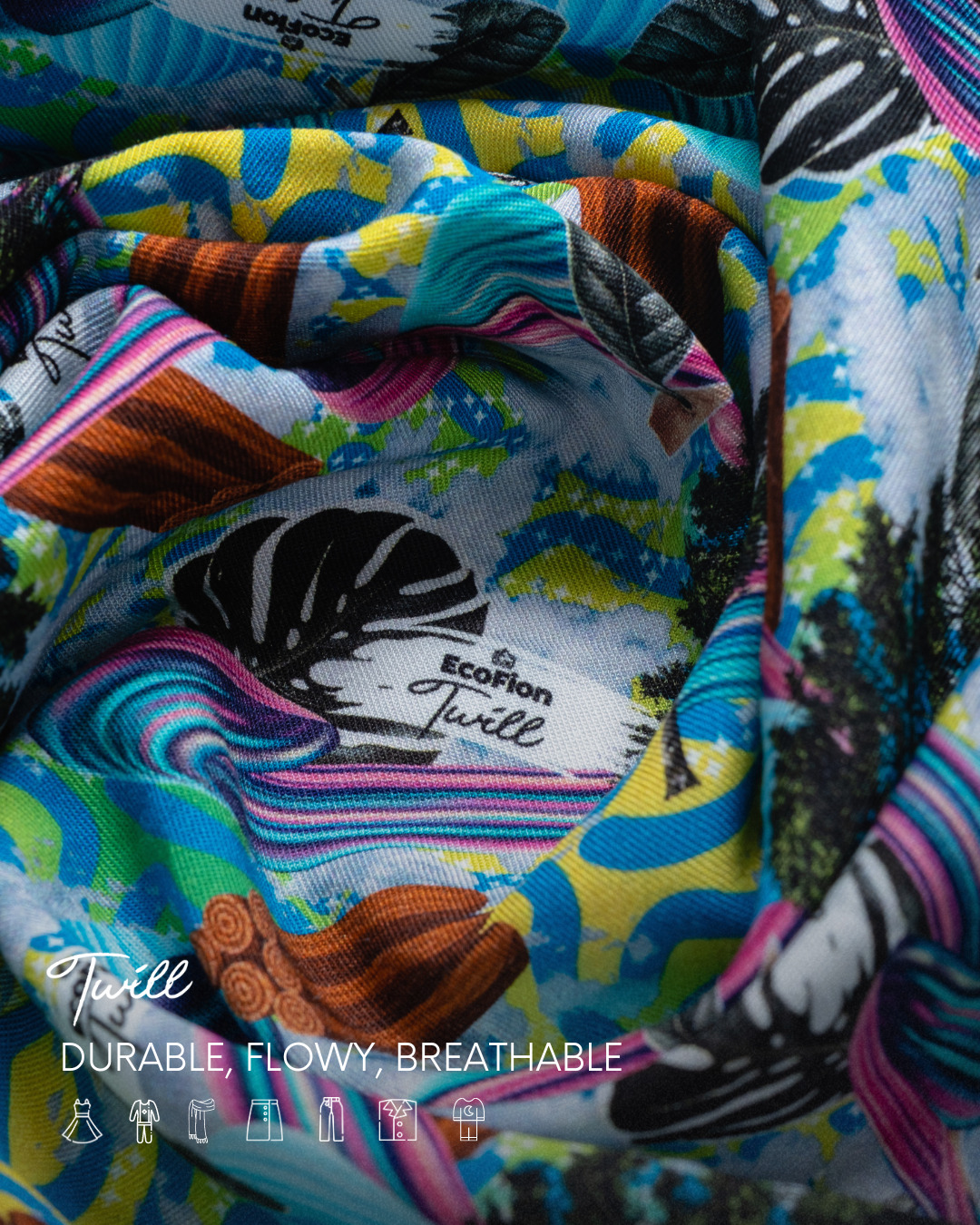
You'll see fine diagonal lines on the surface. Twill usually drapes better and resists wrinkles more than a plain weave of similar weight. Great for modest dresses, trousers, and outerwear.
Satin
The surface is smooth and shiny because the yarns "float" over longer spans. It looks luxurious, but needs more careful handling when sewing.
Dobby and other textures
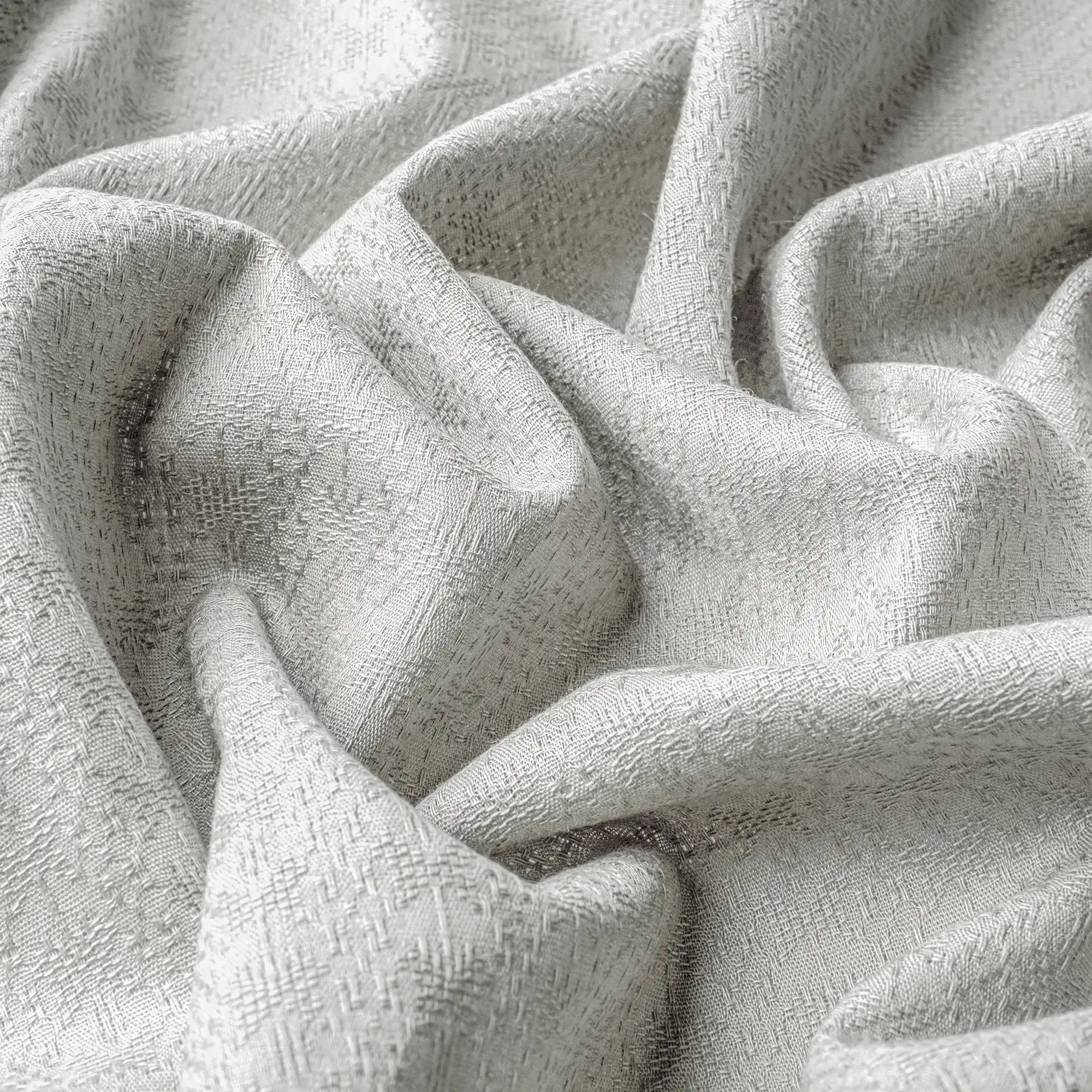
A dobby weave creates small raised patterns on the fabric surface. Ideal for solid-color collections that still want visual interest without a print.
As for weight, a simple rule: lightweight fabrics feel cool and airy, heavier fabrics feel sturdier and more opaque. For modest tops that shouldn't be see-through, for example, you may need a slightly heavier fabric or a tighter weave.
When you handle a sample, try three quick tests: hold it up to the light to check how sheer it is, scrunch it for a few seconds to see how fast it wrinkles, then drape it over your hand to see how it falls. Write the results down so you can compare fabrics side by side.
Match fabric to your production method
Your fabric choice also has to fit the production technique and order size. Here's an overview of Zalmon's services:
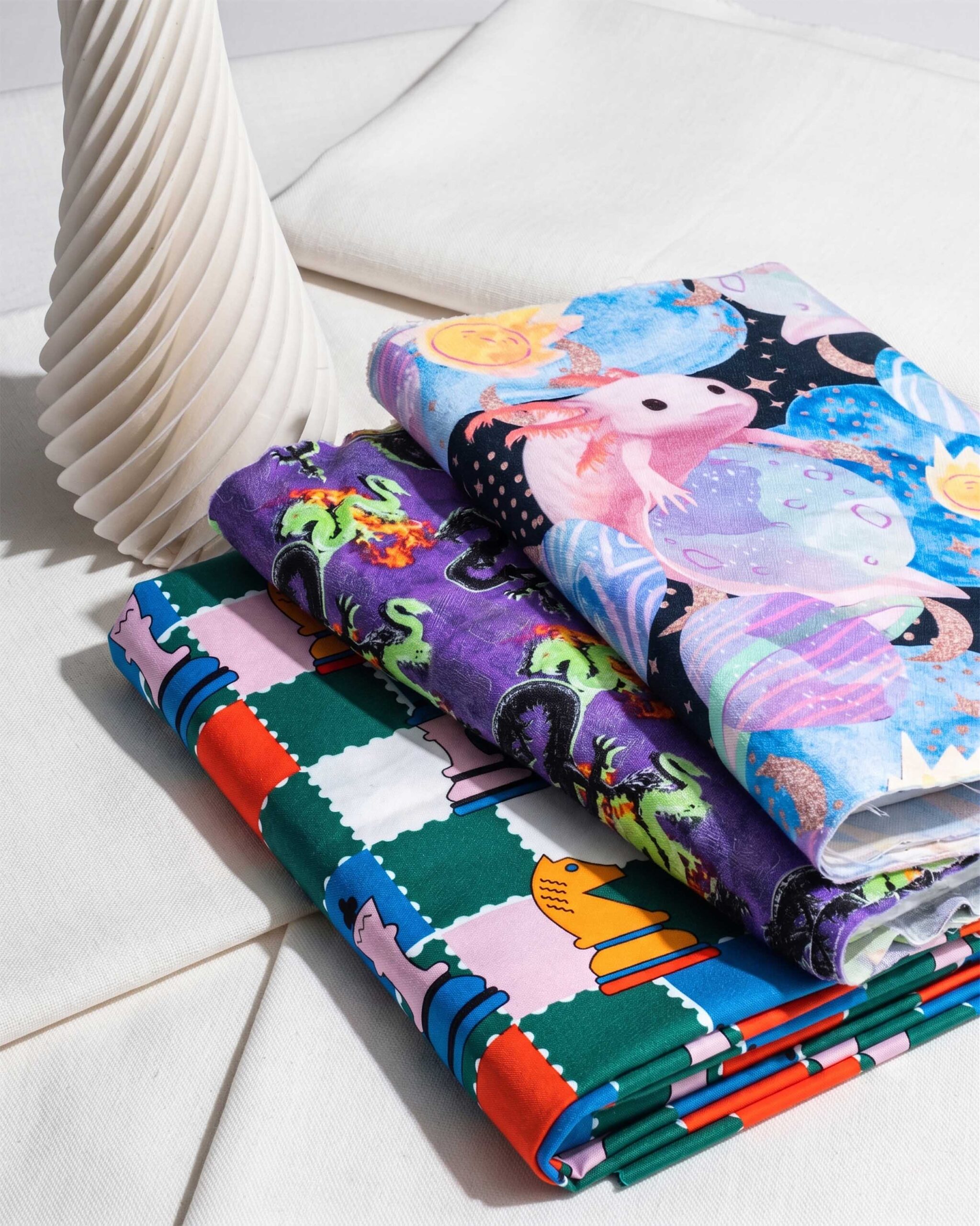
- Custom digital printing: ideal for brands that want their own prints in small quantities. MOQ for natural-fiber fabrics is 50 meters for 2 designs (25 meters per design). For custom-printed polyester, the MOQ is 10 meters.
- Rotary printing: for large-volume production. MOQ and lead time are confirmed per order.
- Custom fabric dyeing: for custom solid colors. MOQ is 300 meters per color per fabric type, with color references from a Pantone TCX code or a fabric swatch.
- Ready stock solid colors: for solid colors without waiting for dyeing.
- Print only: if you already have your own fabric, from 300 meters.
For scheduling, allow 7–10 working days for a digital print strike-off, then at least 21 working days for production in the normal queue. Saturdays and Sundays are not working days, so count back from your launch date in working days, not calendar days.
- Start your first collection with 2 designs and 1 fabric type.
- Watch how the market responds, then add more fabrics or colors in the next batch.
Common beginner mistakes (and how to avoid them)
Do
- Touch and wash fabric samples before ordering.
- Match the fabric to your pattern design.
- Calculate how many meters each style needs before ordering.
- Note down care instructions for your labels.
Avoid
- Choosing fabric only from photos on a screen.
- Placing a large order without a strike-off.
- Using too many fabric types in your first collection.
- Ignoring lead times before peak season.
Many beginners also forget to check material safety. Labels such as OEKO-TEX® STANDARD 100 show that a textile product has been tested for harmful substances. At Zalmon, fabrics are woven and printed in-house at our own mill in Majalaya, with OEKO-TEX and Lenzing certifications.
The easiest way to start comparing is to browse Zalmon's fabric list and order the Zalmon Sample Pack so you can feel each fabric in person.
FAQ about choosing fabric for your clothing brand
What fabric is best for a new clothing brand?
There's no single answer for every brand. For everyday wear in warm climates, cotton, rayon, and TENCEL™ Lyocell are often safe choices because they're comfortable and absorb moisture. Start with your hero product, then choose the one fabric that suits it best.
What's the difference between fabric weight and weave?
Fabric weight (GSM) is the weight of the fabric per square meter, which affects thickness and drape. Weave (plain, twill, satin, dobby) is how the yarns are interlaced, which affects texture, sheen, and wrinkle resistance.
What is Zalmon's minimum order for custom fabric printing?
For custom digital printing on natural-fiber fabrics, the minimum is 50 meters for 2 designs, or 25 meters per design. Custom-printed polyester starts at 10 meters, and print only on customer-supplied fabric starts at 300 meters.
Why should I request a sample or strike-off first?
Colors on screen and on fabric can differ, and you can't judge how a fabric feels from a photo. A strike-off lets you check color, print scale, and hand feel before full production. For digital printing, a strike-off takes 7–10 working days.
What is OEKO-TEX, and does a small brand need it?
OEKO-TEX STANDARD 100 is a label showing that a textile product has been tested for harmful substances. For a small brand, choosing certified fabric is an added value that's easy to explain to customers, especially for clothing worn directly against the skin.
Ready to pick the fabric for your first collection?
Now that you know the basics of choosing fabric for a clothing brand, the next step is feeling the fabrics yourself. Tell us about your product, target customers, and number of designs, and the Zalmon team will help you match the right fabric and service.
Chat via WhatsApp →Get the Sample PackShowroom: Ruko 23 Paskal B71, Bandung, Indonesia.