You have a signature color in mind for your next collection, but no stock fabric comes close. That is exactly where custom fabric dyeing comes in. This guide explains how solid-color dyeing works, when a fashion brand should choose it, what the sampling-to-production flow looks like, and why color can shift slightly between batches.
What is custom fabric dyeing? Custom fabric dyeing is the process of coloring plain fabric in a solid shade chosen by the brand, usually matched to a Pantone TCX code or a physical fabric sample. At Zalmon Fabric, the minimum order is 300 meters per color per fabric type, with color samples in 7–14 working days and production in 30 working days after approval.
What is custom fabric dyeing and how does it work?
Custom fabric dyeing is the process of turning plain fabric, usually white, into a single solid color that the brand specifies. In the textile industry it is often called piece dyeing, because the finished fabric is dyed rather than the yarn.
The principle is simple: fabric is immersed in a dye bath with controlled temperature, time, and auxiliary chemicals, so the color penetrates the fibers. For cellulose fibers such as cotton, rayon, and TENCEL™, the most common choice is reactive dye, a type of dye that forms a chemical bond with the fiber, which makes the color more durable in the wash.
The result is different from printing. In printing, color sits on the surface following the design. In dyeing, color runs through the entire fabric, including the reverse side. That makes dyed fabric a great fit for basics, linings, and solid-color collections that need to look consistent.
When should a fashion brand choose custom dyeing over ready-stock fabric?
A brand should choose custom dyeing when the color it needs is not available from stock, or when that color is part of its identity and must stay the same across several collections. If the color is common and the quantity is small, ready-stock colored fabric is usually more practical.
Zalmon Fabric offers three routes for color: ready-stock solid color fabric, custom fabric dyeing, and custom digital printing for patterns. The table below sums up the differences.
| Option | Color | Minimum order | Best for |
|---|---|---|---|
| Ready-stock solid color | Colors currently in stock | Based on available stock | Product tests, small orders, fast turnaround |
| Custom fabric dyeing | Solid color matched to a Pantone TCX code or fabric sample | 300 m per color per fabric type | Signature colors, basics, repeat production |
| Custom digital printing | Your own pattern, unlimited colors | 50 m for 2 designs (25 m per design) on natural fabrics | Printed collections, scarves, printed hijabs |
In short, custom dyeing suits brands that already know exactly which color they want and have enough volume. If you are still testing the market, starting with stock fabric often makes more sense.
Which fabrics can be custom dyed?
Cellulose-based natural fabrics, such as cotton, rayon/viscose, TENCEL™ Lyocell and Modal, and linen, generally take reactive dyes well, which makes them good candidates for solid-color dyeing. The fabric types available for dyeing at Zalmon Fabric are confirmed per order, based on base-fabric availability.
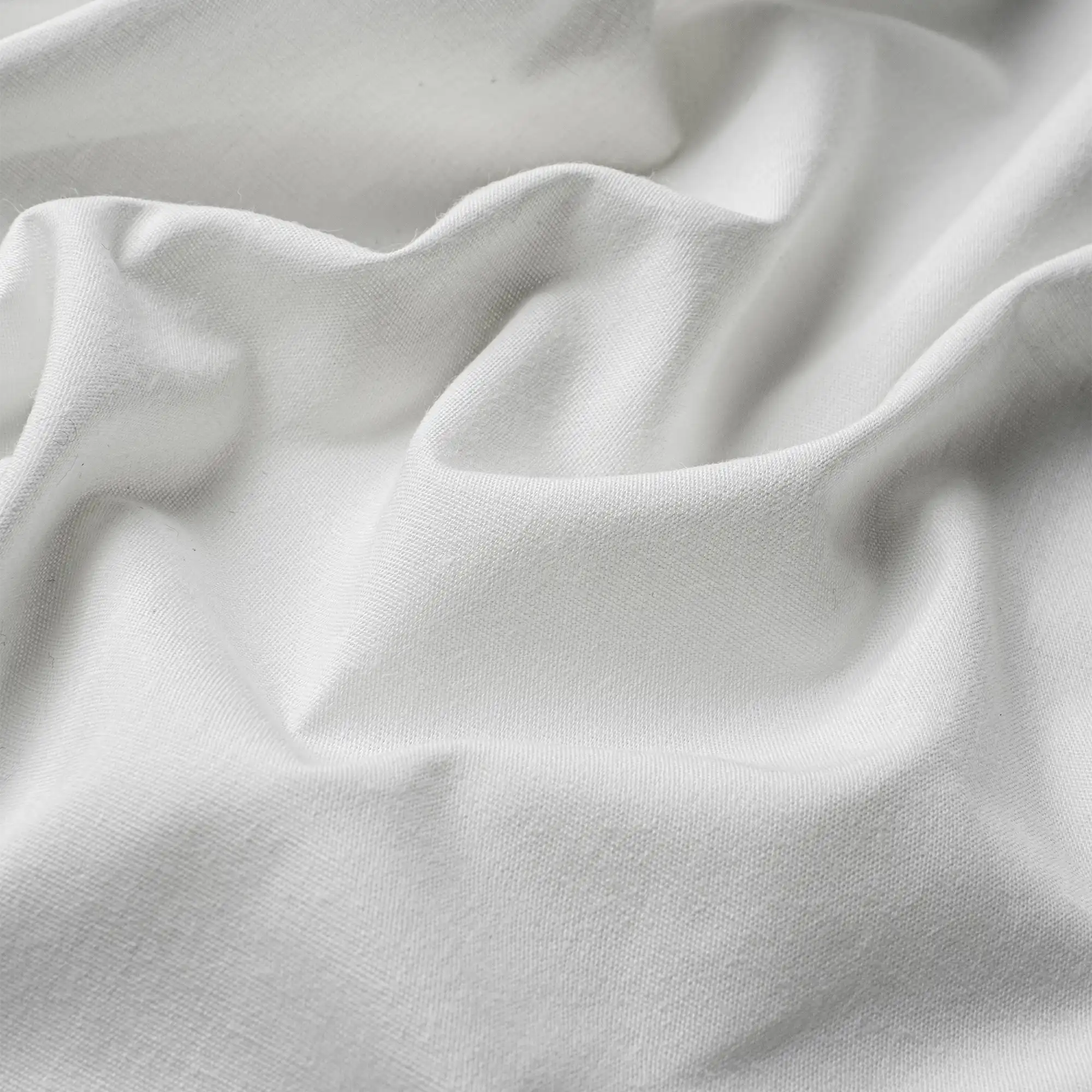
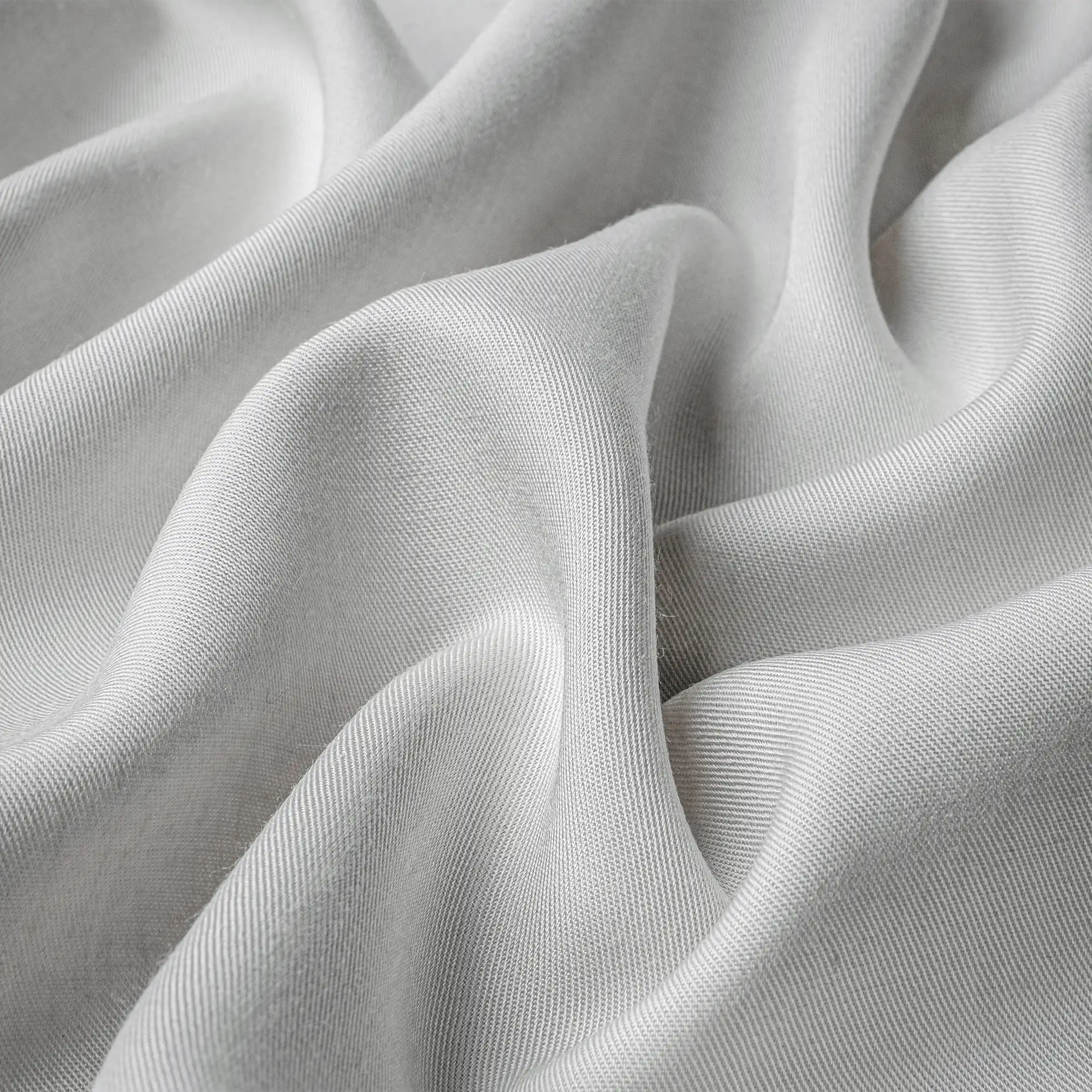
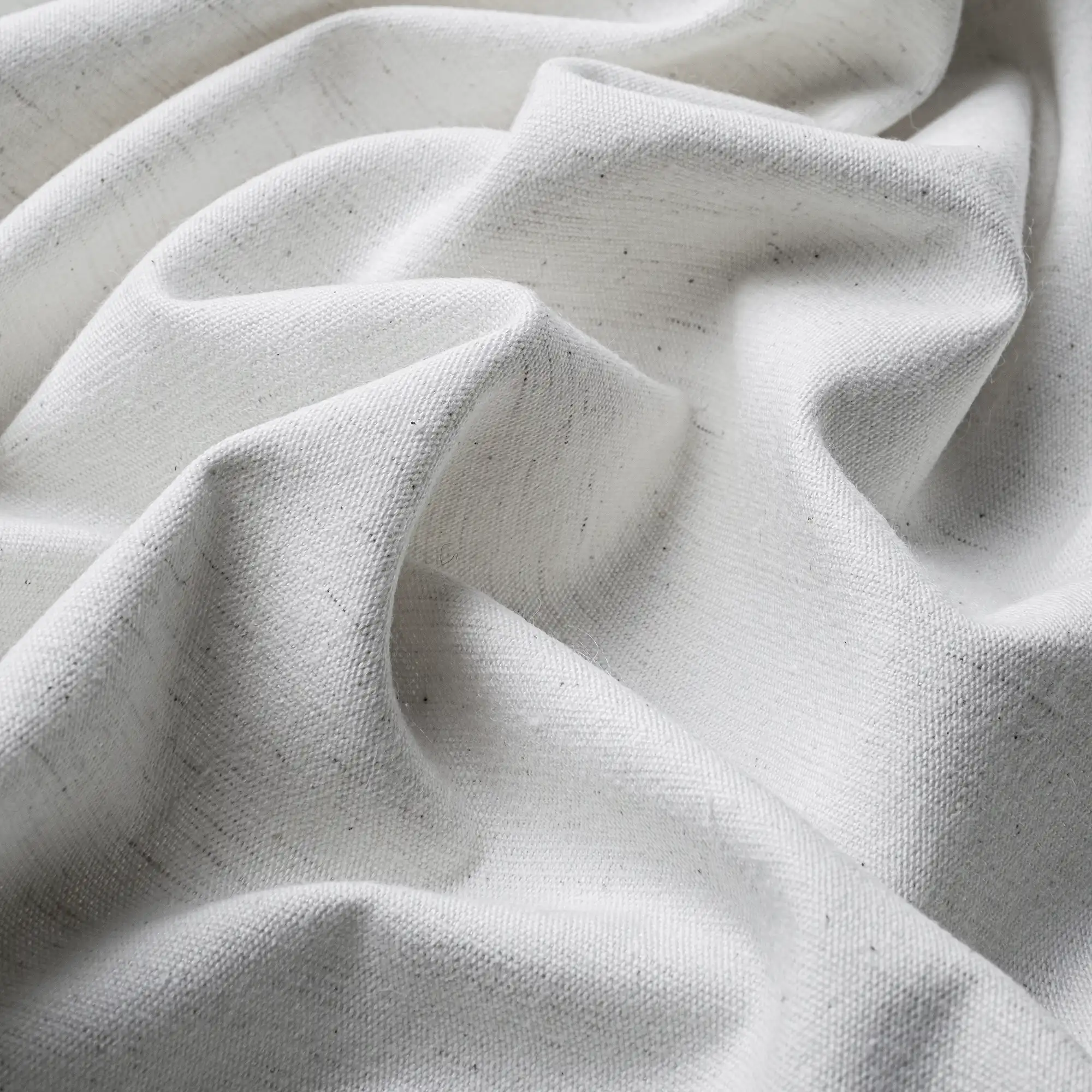
One thing brands often overlook: the same color looks different on different fabrics. Fabrics with a soft sheen, like rayon or TENCEL™, tend to make color look more vivid, while cotton twill or linen gives a more matte impression. The weave texture also changes how light reflects.
That is why the dyeing MOQ is counted per color per fabric type. Sage on cotton and sage on TENCEL™ are two separate dye recipes. You can browse base fabric options in the Zalmon fabric list.
How does the custom dyeing process work at Zalmon Fabric?
The custom dyeing process at Zalmon Fabric has five stages: send a color reference, sampling, approval, production, and delivery. Here is how each step works.
- Send your color reference and fabric type. Zalmon Fabric accepts color references as a Pantone TCX code or a physical fabric sample. Specify the base fabric and the number of meters per color as well.
- Color sampling. Zalmon Fabric makes a 10×10 cm sample for each color, which takes 7–14 working days. The sampling fee is IDR 350,000 and can cover several colors at once.
- Sample approval. Check the samples under daylight and indoor lighting. Once they match, give written approval so production can begin.
- Bulk production. Dyeing production runs for 30 working days after the sample is approved. The sampling fee is deducted from your production payment if you go ahead with the order.
- Inspection and delivery. The dyed fabric is checked and shipped to your production address or garment maker.
A Pantone TCX code is a color code from the Pantone Fashion, Home + Interiors system, printed on cotton, which makes it more representative for textiles than an on-screen color. You can see the reference format on the Pantone Cotton Swatch Card (TCX) page.
What is the MOQ and lead time for custom fabric dyeing?
The MOQ for custom fabric dyeing at Zalmon Fabric is 300 meters per color per fabric type, with production taking 30 working days after the sample is approved. Add 7–14 working days for sampling, and the total time from brief to finished fabric is roughly 37–44 working days.
Working days exclude Saturdays and Sundays, so on a regular calendar that is about 8–9 weeks, not counting the time you spend reviewing samples or shipping. For seasonal collections, count backward from your launch date and leave room for sewing.
- MOQ: 300 m per color per fabric type.
- Sampling: 10×10 cm per color, 7–14 working days.
- Production: 30 working days after approval.
- Orders above 300 m: split into several dye batches.
If you need less than 300 m per color, consider ready-stock solid colors in the meantime, or order a Zalmon Sample Pack first to shortlist your base fabric.
Why can dyed fabric differ in color between batches?
Dyed fabric can differ slightly between batches because each batch is a separate dyeing process, and small variables like temperature, water, or fiber absorption are never 100% identical. At Zalmon Fabric, the color tolerance between batches is ±5–10%.
In the textile industry, fabric from a single dyeing run is called a dye lot or shade lot. Differences between lots are usually subtle, a touch lighter or warmer, but they can show when two pieces from different batches are sewn side by side.
The safest approach is to plan garment production by batch: cut one style, or at least one garment's panels, from the same batch. Ask your garment maker not to mix rolls from different batches in a single piece.
How do you get dyed fabric to match the color you want?
The key is a physical color reference, not a color on a screen. Monitors and phones display color with emitted light (RGB), while fabric reflects light, so on-screen colors almost always look different once they become fabric.
- Use a Pantone TCX code or send a physical fabric swatch as your reference, not just a screenshot.
- Choose the base fabric first, then the color, since color looks different on each fabric.
- Check samples under daylight and under the lighting in your store or photo studio.
- Request several colors at once during sampling to save time.
- Ask your dyeing partner about material certifications that matter to your customers.
Certifications help you answer customer questions about safety. For example, the OEKO-TEX® STANDARD 100 label indicates that a textile has been tested for harmful substances.
If you also produce printed collections, read about fabric print color matching so your solid palette and your prints stay in harmony.
Zalmon Fabric is a natural-fiber fabric supplier (TENCEL™, cotton, rayon/viscose, silk, linen) and custom digital fabric printing service based in Bandung, Indonesia. Fabrics are woven and printed in-house at its own mill, with OEKO-TEX and Lenzing certifications. Showroom: Ruko 23 Paskal B71, Bandung 40181, Indonesia. WhatsApp: +62 813-2282-8217.
FAQ about custom fabric dyeing
What is the minimum order for custom fabric dyeing at Zalmon Fabric?
The minimum order for custom fabric dyeing at Zalmon Fabric is 300 meters per color per fabric type. Two colors on one fabric type therefore means at least 600 meters. Orders above 300 meters are split into several dye batches.
Can fabric be dyed to a Pantone color?
Yes, Zalmon Fabric accepts color references as a Pantone TCX code or a physical fabric sample. TCX codes are recommended because the standard is printed on cotton, so it is closer to a textile result than an on-screen color.
How long does custom fabric dyeing take?
The total time is roughly 37–44 working days. Color sampling takes 7–14 working days, then production runs for 30 working days after the sample is approved. Working days exclude Saturdays and Sundays.
Will the bulk color match the sample exactly?
Not always exactly. Each dye batch is a separate process, so Zalmon Fabric works with a color tolerance of ±5–10% between batches. Plan garment cutting by batch so these subtle differences do not show within one product.
Is the dyeing sample fee refundable?
Yes, as a deduction. The IDR 350,000 sampling fee can cover several colors, and the amount is deducted from your production payment if you go ahead with a dyeing order at Zalmon Fabric.
Ready to create your brand's signature color?
Send your Pantone TCX code or fabric sample, along with the fabric type and meterage. The Zalmon Fabric team will help you plan your custom fabric dyeing from sampling to production.
Chat via WhatsApp →Get the Sample PackShowroom: Ruko 23 Paskal B71, Bandung, Indonesia.