Rotary fabric printing for large‑scale production.
Rotary fabric printing uses one cylinder for each colour, printing fast and consistently from the first metre to the last. Ideal for the bestselling designs you want to reproduce at volume, at a more efficient cost per metre.
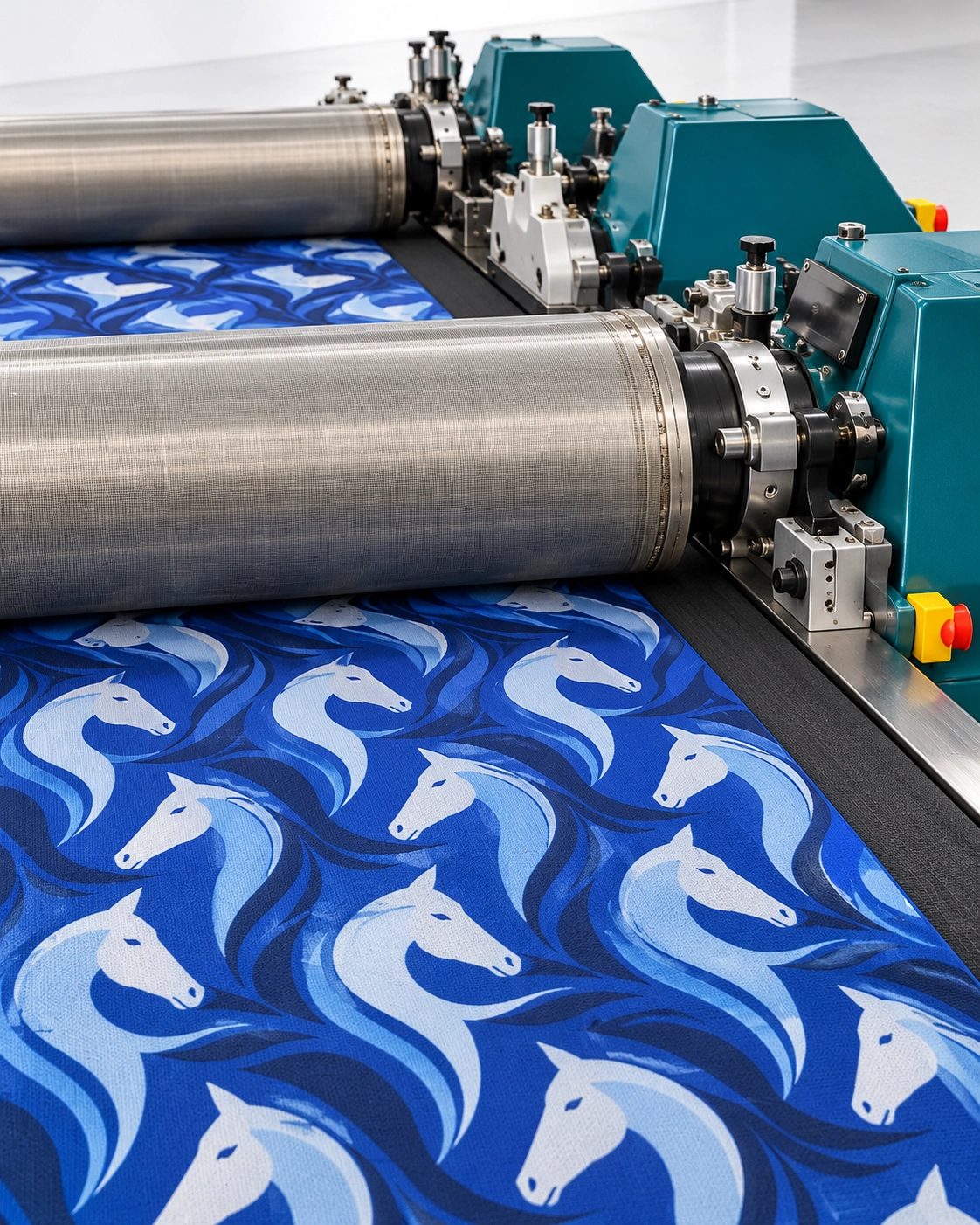
Rotary fabric printing: fast printing for thousands of metres.
Rotary fabric printing prints designs using perforated cylinders (rotary screens). Each colour has its own cylinder; the fabric runs beneath the row of cylinders and the design builds up layer by layer, continuously.
Because the cylinders have to be made first, there is an upfront setup cost. After that, production runs fast and the cost per metre keeps falling the more fabric you print. That is why rotary is the choice for large-scale fabric printing.
At Zalmon Fabric, rotary printing is available on 25+ natural-fibre fabrics, and both the fabric and the colours can be customised. Our team is based in Bandung, Indonesia, and works with fashion brands across Indonesia and beyond.
Rotary fabric printing or digital printing?
Rotary wins at volume; digital wins for testing designs in small runs. The print industry association FESPA notes that rotary screen remains a workhorse for high-volume textile production.
| Aspect | Rotary Printing | Digital Printing |
|---|---|---|
| Best for | Bestselling designs, mass production | Market tests, capsule collections |
| Setup cost | Yes (one cylinder per colour) | None |
| Cost per metre (high volume) | More efficient | Higher |
| Number of colours | Set by number of cylinders | Unlimited |
| Minimum order | High volume, confirmed per order | From 50 m for 2 designs |
Why choose rotary fabric printing with Zalmon.
Efficient cost per metre
At high volume, rotary costs less than small-run printing.
Consistent
Stable colour and print throughout the run.
Custom fabrics
Fabric type, construction and composition can be tailored.
Custom colours
Print colours can be set to your request.
How to order rotary fabric printing in 6 steps.
Choose or customise your fabric
Pick from 25+ natural-fibre fabrics, or customise one. See the Fabric List, or chat with us first on WhatsApp.
Prepare your design
Use your own design, following our Design Terms. A colour sample is made before mass production.
Fill in your order details
Complete the order form below accurately so our team can work out what you need.
Payment
You will receive your order and payment details. Check they match and agree to the terms and conditions. Orders are processed once payment is received.
Fabric production
Your order is produced according to the schedule and terms we confirm. Colours can vary by around 5–10% from the sample due to the reactive process.
Receive & review
Fabric goes through 2 quality checks using the 4-point system before shipping. Share your experience on Google Reviews.
Tips for preparing your design for rotary printing.
Keep the colour count tight
Each colour needs one cylinder. A focused palette makes production more efficient.
Make sure the design repeats
The design prints over and over along the fabric, so the repeat must join seamlessly with no visible lines.
Follow our design terms
Check our Design Terms for file format and size before sending your design.
Start with a proven design
Test first with digital printing in small runs, then move your bestsellers to rotary.
Two quality checks
Every order is inspected twice with the 4-point system, a fabric inspection method widely used in the textile industry, before it ships to you.
Your design stays yours
We respect the original work of artists and customers. Email us an Agreement Form or Confidentiality Agreement (NDA) and we will sign it.
25+ natural-fibre fabrics.
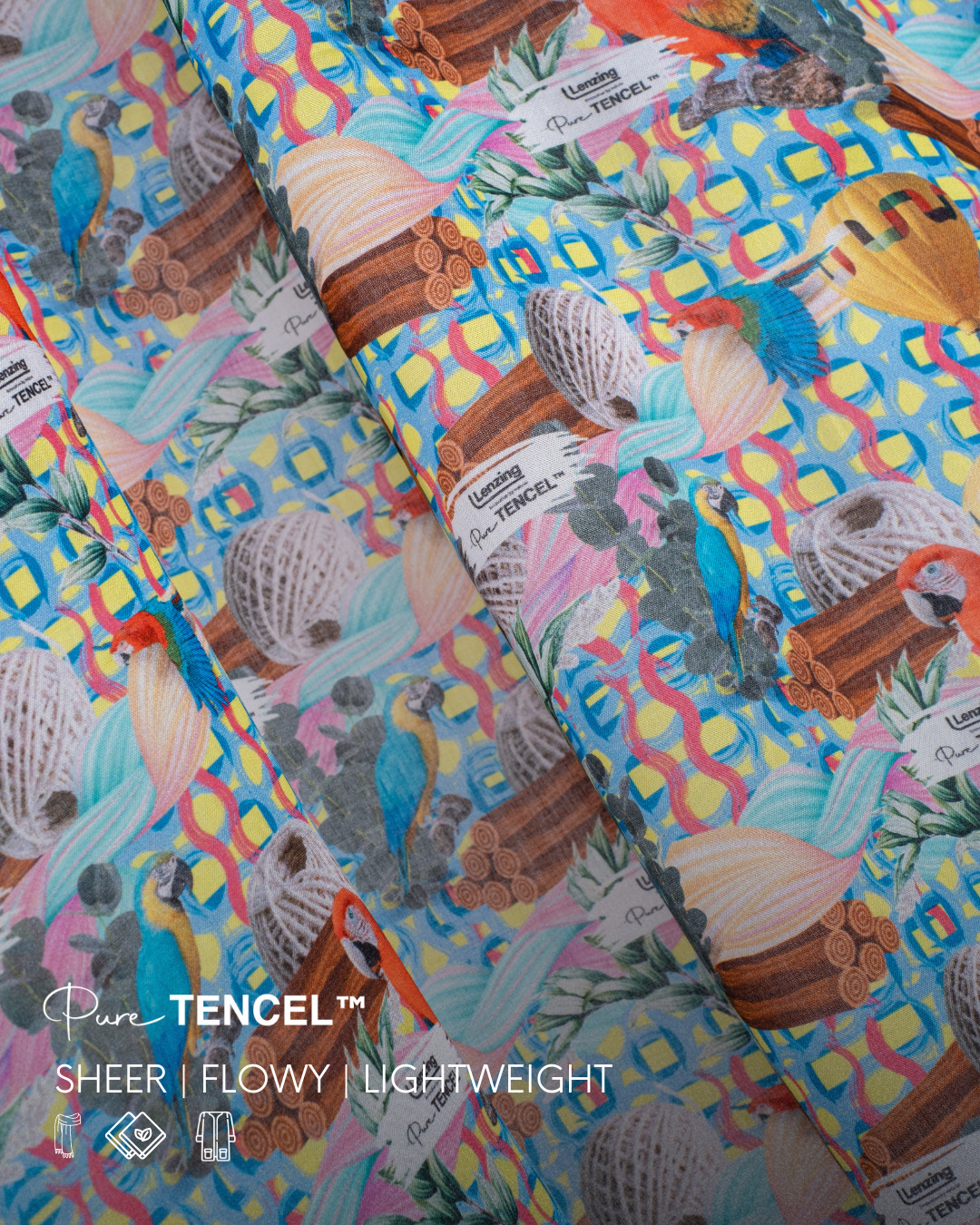
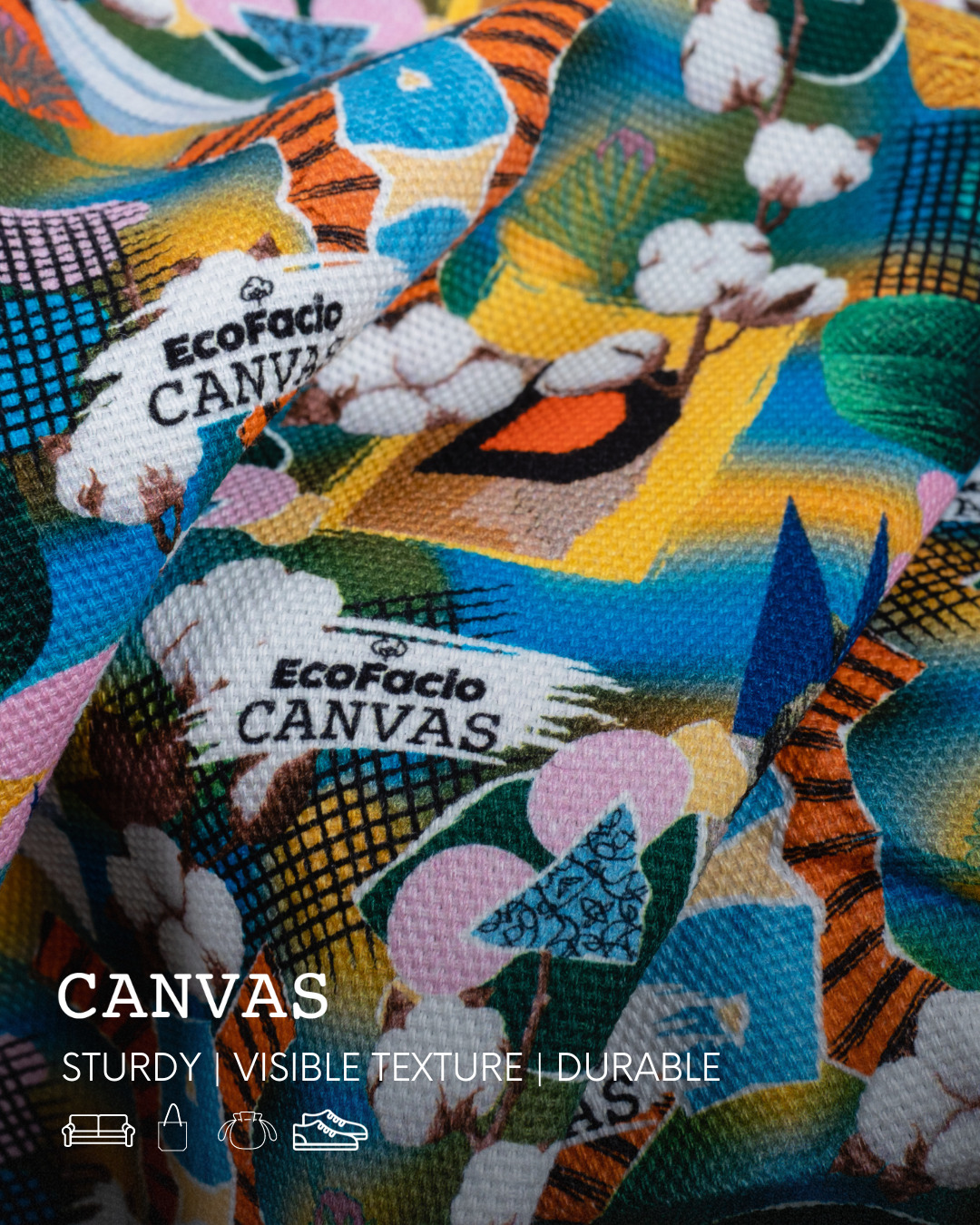
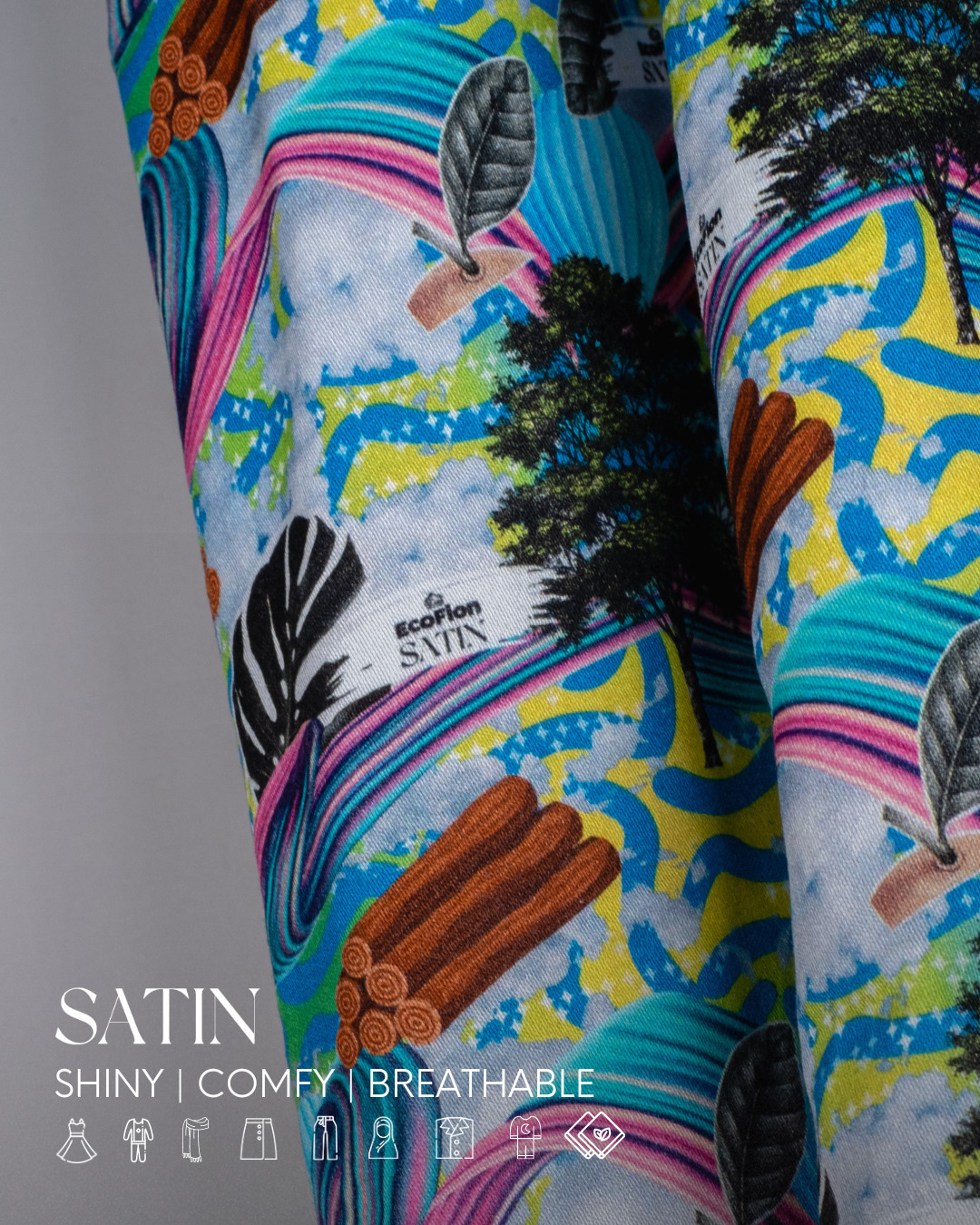
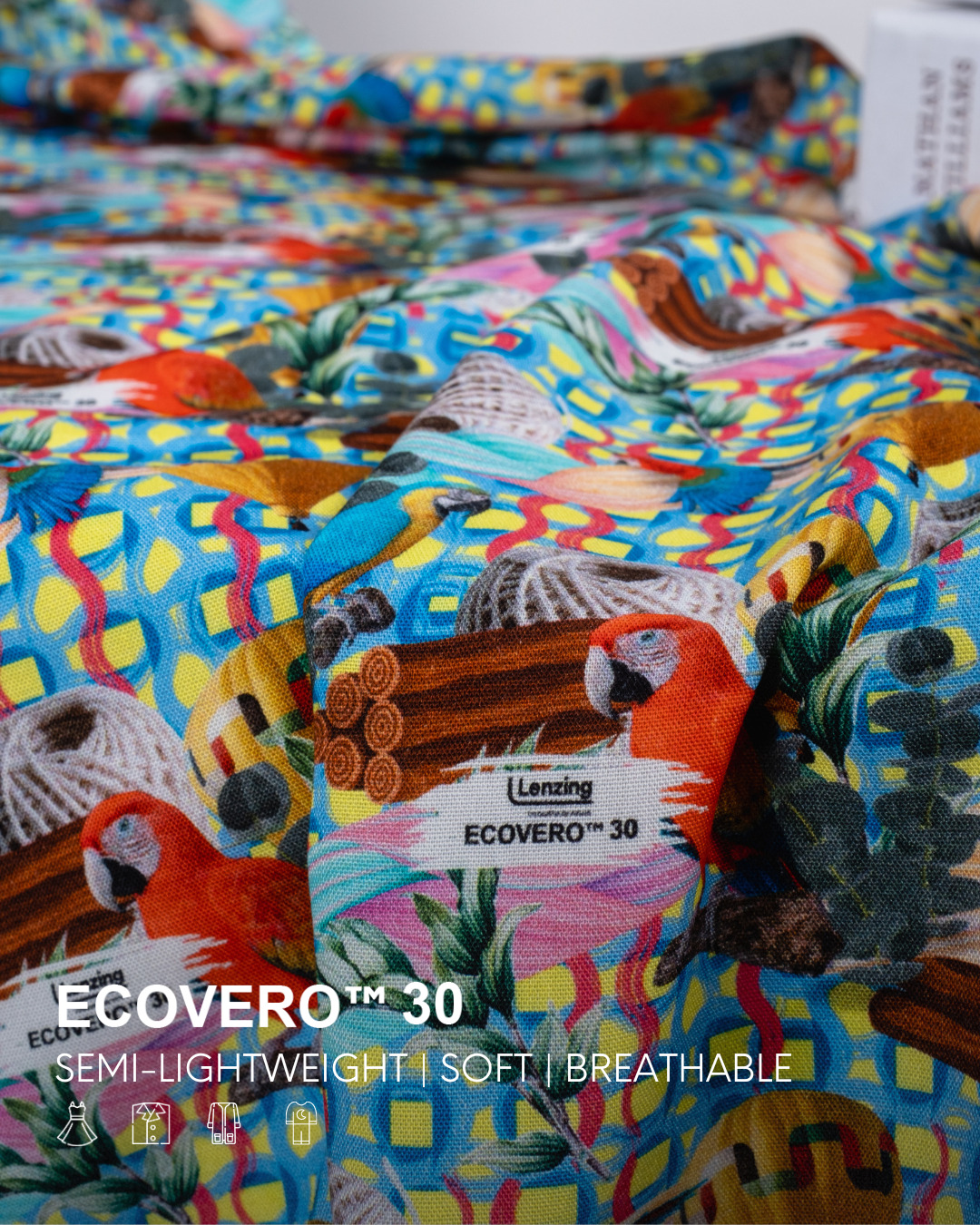
From TENCEL™ and cotton to viscose: choose what suits your collection, or request a custom construction and composition.
Terms you’ll hear in rotary printing.
- Rotary screen
- A perforated cylinder that presses colour paste onto the fabric. One cylinder per colour.
- Repeat
- The size of one pattern unit that repeats along the fabric.
- Colour sample
- A printed sample to check colour before mass production. Production can vary by around 5–10% from the sample.
- 4-point system
- A fabric inspection method that scores each defect by its size. We use it in our two quality checks.
Rotary fabric printing questions
What is the difference between rotary and digital printing?
Rotary uses one printing cylinder per colour: there is an upfront setup cost, but it is far more efficient at high volume. Digital prints straight from a file with no screens, which suits small orders. Read the full comparison in Digital vs Rotary Fabric Printing.
When is rotary printing cheaper than digital printing?
When the same design is printed in large quantities. The cylinder cost is paid upfront, then the cost per metre falls as volume grows. For small quantities, digital printing is usually cheaper.
What is the minimum order for rotary printing?
Rotary printing is designed for high-volume production. We confirm the minimum order and production schedule based on your fabric and design, so chat with our team for a quote.
Can I use a custom fabric?
Yes. Choose from our 25+ natural-fibre fabrics, or request a custom fabric type, construction and composition.
Will the production colour match the sample exactly?
We make a colour sample before mass production. Because of the reactive process during production, colours can vary by around 5–10% from the sample.
Is my design protected?
We respect original work. If you need it, email us an Agreement Form or Confidentiality Agreement (NDA) and we will sign it.
Still testing the market?
Start with custom digital printing: from 50 metres for 2 designs. Move your bestsellers to rotary once they prove themselves.
Ready to scale your bestselling design?
Tell us your design, fabric and quantity. Our team will work out your production options.