Planning a collection with your own prints, but not sure whether to choose digital printing or rotary printing? Both techniques put a design onto fabric, but they work differently, cost differently and give different results. Pick the wrong one and you either tie up cash in unsold stock, or pay too much per metre.
In this guide we break down digital vs rotary fabric printing side by side, with a practical way to choose the right method for where your brand is right now.
What Is Digital Fabric Printing?
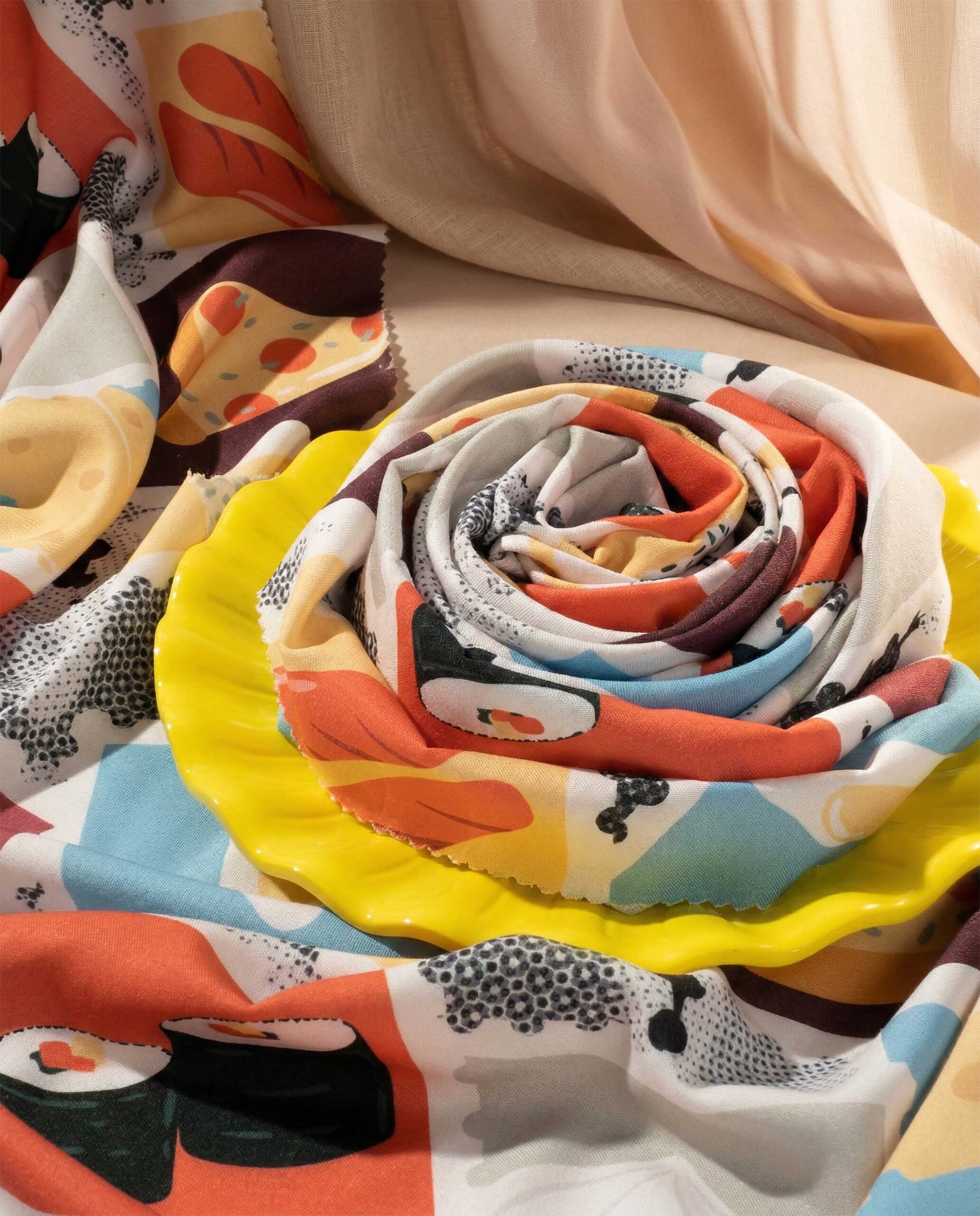
Digital fabric printing prints a design straight from a digital file onto fabric using a textile inkjet machine. It works much like an office printer, only far larger, and with inks made for textile fibres.
Because no physical screens are needed, a design can go to print as soon as the file is ready. That is why digital printing is the go-to choice for new brands and for brands that change collections often.
Pros
- Unlimited colours: gradients, watercolour effects, photo-based designs.
- Sharp detail: fine lines stay crisp.
- Low minimums: ideal for testing the market.
- Mix designs in one order.
- No screen costs when you change designs.
Cons
- Higher cost per metre than rotary at very large volumes.
- Slower for orders of thousands of metres.
What Is Rotary Fabric Printing?
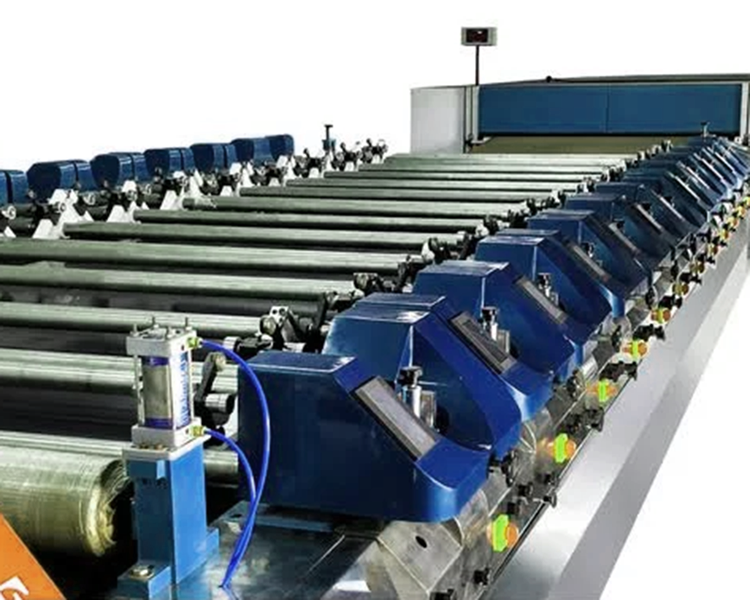
Rotary printing uses perforated cylinders (rotary screens), one cylinder for each colour in the design. The fabric runs beneath a row of these cylinders, and each one presses its colour paste in turn until the full design is built up.
Because the screens have to be made first, rotary printing has an upfront setup cost. Once the machine is running, though, production is very fast and efficient. The print industry association FESPA notes that rotary screen remains a workhorse for high-volume textile production.
Pros
- Lower cost per metre at high volume.
- Highly consistent from the first metre to the last.
- Fast production for thousands of metres.
- Great for bestselling designs you reorder again and again.
Cons
- Number of colours limited by the number of cylinders.
- Screen-making cost for each colour.
- Much higher minimum order.
- Less suited to soft gradients or photographic designs.
Digital vs Rotary Fabric Printing: Comparison Table
| Aspect | Digital Printing | Rotary Printing |
|---|---|---|
| How it works | Inkjet, straight from the file | One cylinder screen per colour |
| Setup cost | None | Yes (per colour) |
| Minimum order | Low, designs can be mixed | High |
| Number of colours | Unlimited | Limited by cylinders |
| Gradients & photos | Excellent | Limited |
| Cost/metre (high volume) | Higher | Lower |
| Consistency at volume | Good | Excellent |
| Best for | New brands, design tests, capsule collections | Bestselling designs, mass production |
When Should You Choose Digital Printing?
Choose digital printing if you:
- Are just starting a brand and don't yet know which designs will sell.
- Are launching a capsule or limited edition collection with many design variations.
- Have full-colour artwork: gradients, hand illustration or photo-based designs.
- Want to keep stock lean so your cash isn't stuck in the warehouse.
At Zalmon Fabric, custom digital printing starts from 50 metres for 2 designs (25 metres per design) on natural-fibre fabrics, and from 10 metres on premium polyester. See the details on our Custom Digital Printing page.
When Should You Choose Rotary Printing?
Choose rotary printing if you:
- Already have a proven design and want to reproduce it in large quantities.
- Need the lowest possible cost per metre to protect your margins.
- Have a relatively simple design with a limited number of colours.
- Need consistency for wide distribution or resellers.
See the service details on our Rotary Printing page.
The Safest Strategy: Start Digital, Scale to Rotary
Many fashion brands follow this pattern to keep the risk of dead stock low:
- Test designs with digital printing in small quantities.
- Measure the market response: which designs sell out fastest.
- Move the winning designs to rotary printing for large runs at a more efficient cost per metre.
This way you only invest heavily in designs that have already proven themselves. The advantage of working with one partner that offers both digital and rotary printing is that you don't need to switch suppliers when your brand starts to scale up.
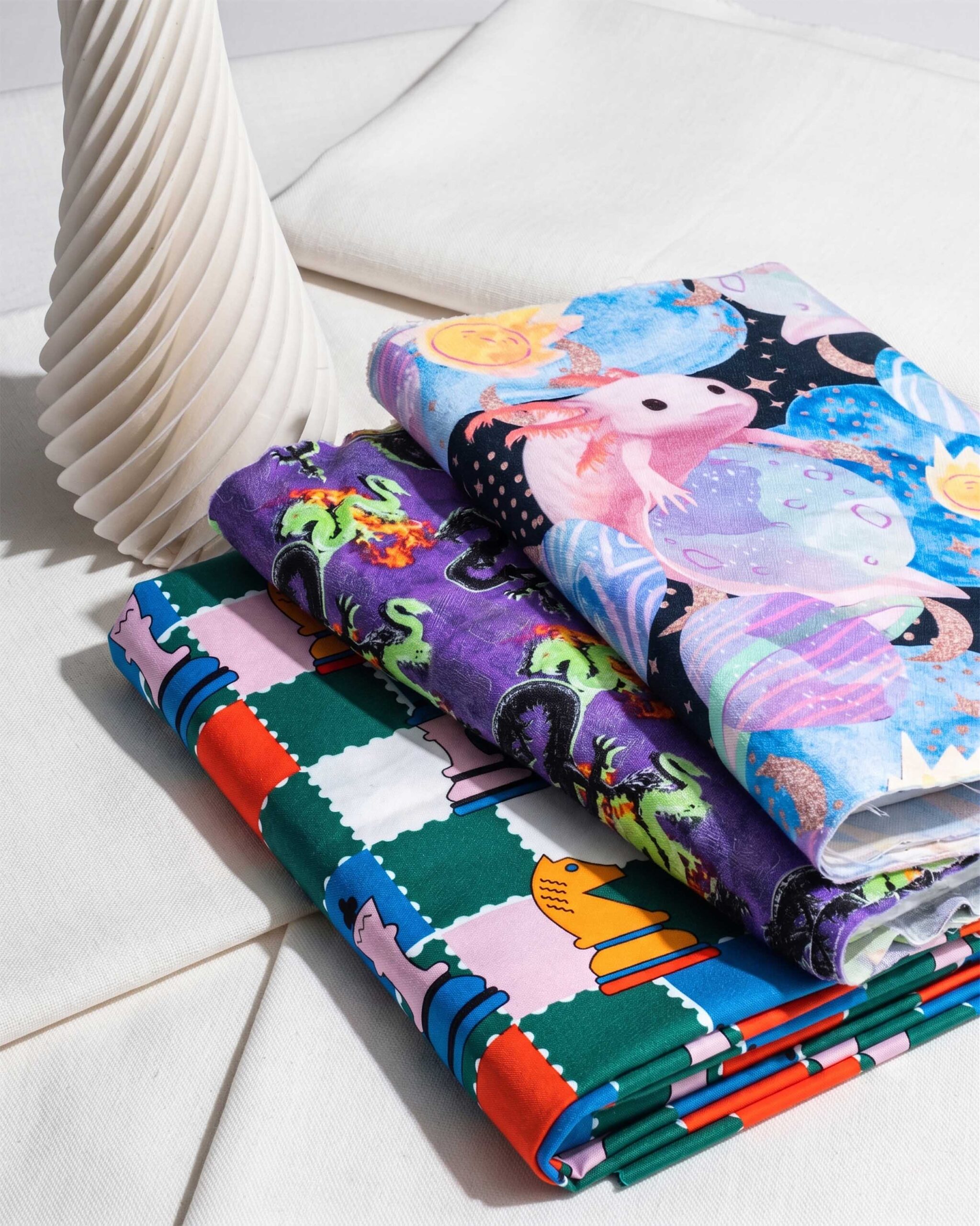
Don't Forget: The Fabric Shapes the Result
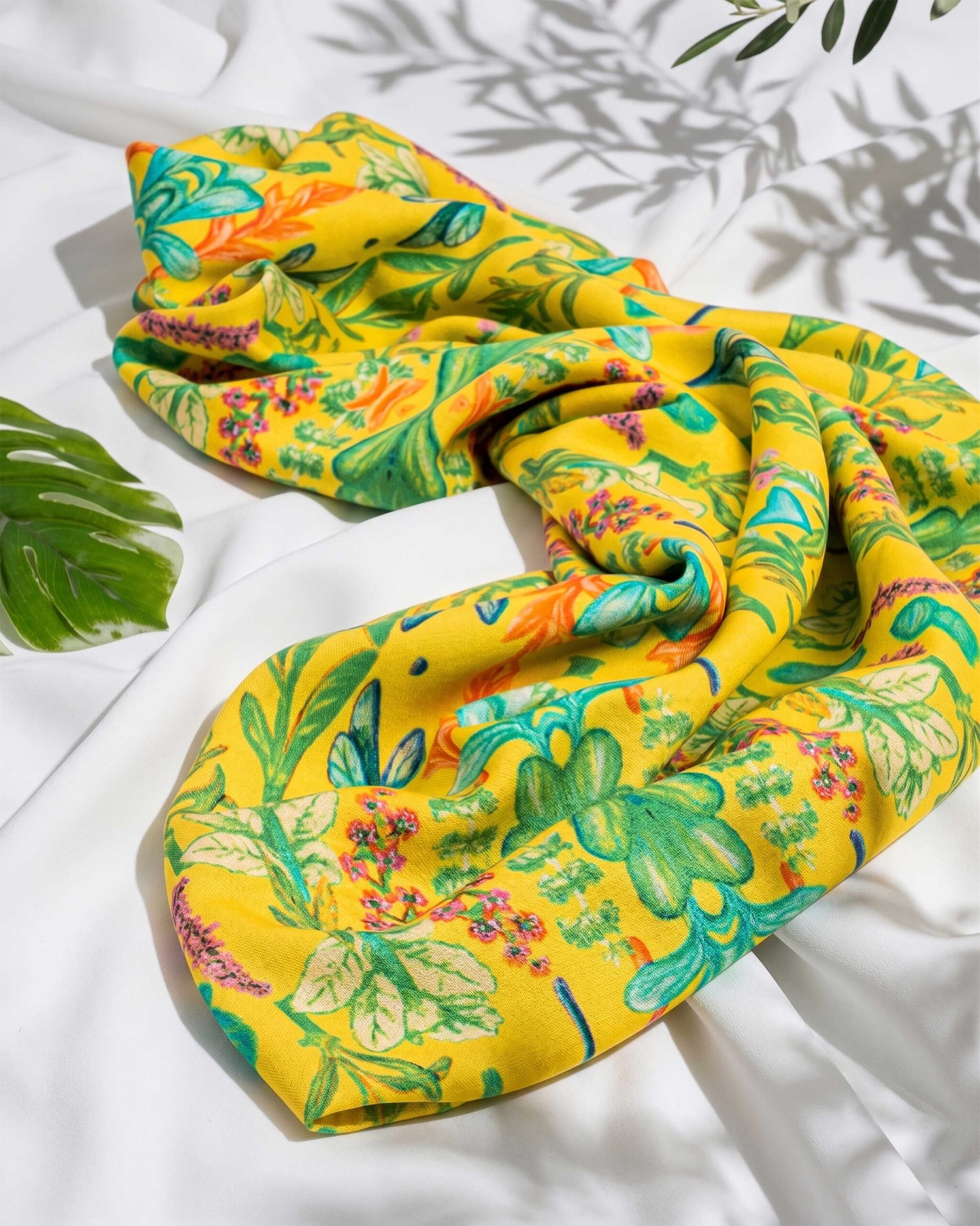
The printing technique is only half the story. The fabric itself has a big effect on colour sharpness, handfeel and the comfort of the finished garment. Popular natural-fibre choices for custom printing include:
- TENCEL™ Lyocell & Modal: fluid drape, cool and soft, great for dresses and modest wear.
- Cotton: versatile for shirts, outerwear and daily wear.
- Rayon/Viscose: light and flowy, a favourite for modest fashion.
- Silk: luxurious sheen for premium collections and scarves.
Browse every option on our Fabric List, or feel the fabrics in person with the Zalmon Sample Pack before you produce.
Tips Before Your Fabric Printing Run
- Always ask for a strike-off (printed sample). Colours on your phone or laptop screen can look different on fabric. At Zalmon, a strike-off takes around 7–10 working days.
- Plan backwards from your launch date. Our normal production queue takes at least 21 working days, not including the strike-off. For seasonal collections such as Eid, book your slot well in advance.
- Prepare a high-resolution design file with a clear repeat size. Check our Design Terms so your file is print-ready.

FAQ: Digital vs Rotary Fabric Printing
What is the main difference between digital and rotary fabric printing?
Digital printing prints straight from a file with no screens, so it suits small orders and full-colour designs. Rotary printing uses one cylinder per colour and has a screen cost, but it is far more efficient for large volumes.
Which is cheaper, digital or rotary printing?
For small orders, digital printing is cheaper because there are no screen costs. For orders of thousands of metres of the same design, rotary printing is usually cheaper per metre.
Does digitally printed fabric fade?
Colour fastness depends mainly on matching the ink to the fibre and on the finishing process after printing. With the right process, digital prints hold up well to washing in normal use. Internationally, colour fastness to washing is commonly tested to ISO 105-C06.
What is the minimum order for custom fabric printing at Zalmon Fabric?
For natural-fibre fabrics, from 50 metres for 2 designs (25 metres per design). For premium polyester, from 10 metres. For print-only service on your own fabric, the minimum is 300 metres.
Can you print on my own fabric?
Yes, through our Print Only service: you send the fabric, and Zalmon focuses on the printing.
Still deciding between digital and rotary?
The Zalmon Fabric team can help you work out the best option for your design and budget, from digital printing to test the market to rotary for large runs, all in one flow at our own factory in Majalaya, Indonesia.
Chat on WhatsApp → Get the Sample PackShowroom: Ruko 23 Paskal B71, Bandung, Indonesia.